
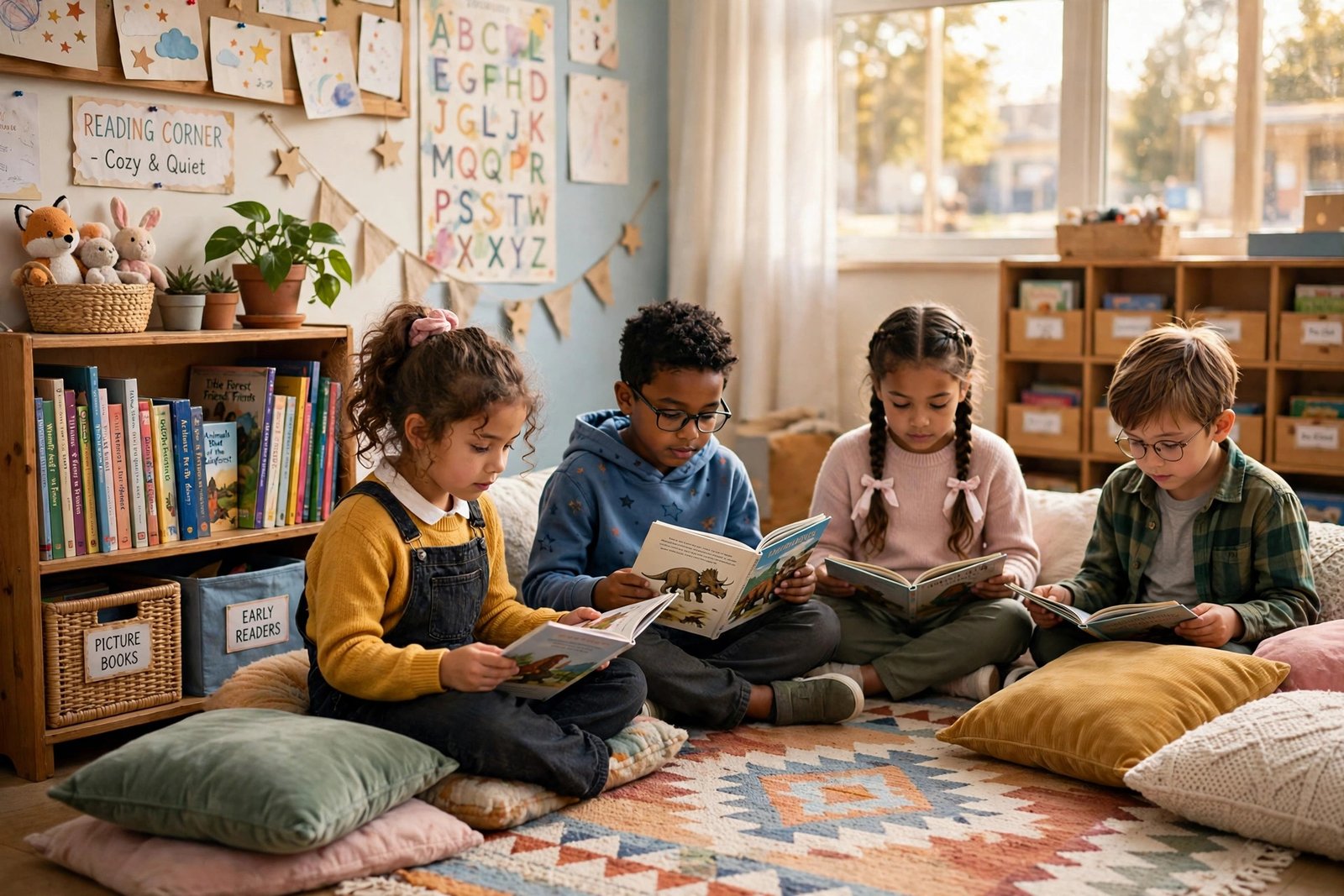

A great reading corner is a small, inviting spot in a classroom where kids actually want to pick up a book and stay with it. It is not just a shelf with a rug beside it. A great corner feels calm, looks welcoming, and makes it easy for a child to find a book that fits. It gives kids choice, comfort, and a little bit of quiet in a busy room. The ideas below cover seating, storage, themes, and routines, so you can build a corner that fits your room, your budget, and your students.
Table of Contents
- Cozy Seating That Invites Kids to Stay
- Shelving and Displays That Help Kids Choose
- Themes That Make the Corner Feel Special
- Interactive Touches That Build Reading Habits
- Calm Routines and Finishing Touches
- Materials Breakdown for a Budget Friendly Reading Corner
- Comparing the Ideas at a Glance
- Frequently Asked Questions
- Final Thoughts
Cozy Seating That Invites Kids to Stay
Comfort matters more than fancy furniture. Kids read longer when they can settle in, stretch out, and relax. These seating ideas use simple pieces that hold up to daily classroom use.
1. Bean Bag Corner
Set out two or three bean bags in a corner with a low bookshelf behind them. Choose bags with washable covers, since spills and sticky hands are part of elementary life. Add a small basket of short picture books nearby so younger readers do not have to cross the room to find something. Rotate the books in the basket every week or two to keep the corner feeling fresh.
2. Floor Cushions and a Soft Rug
Lay down a thick rug and scatter large floor cushions in different colors. Cushions are cheap, easy to stack, and simple to move when you need the floor for something else. Pick a rug that is big enough for four or five kids but not so large that it takes over the room. A rug with a simple pattern hides stains better than a plain light one. Let kids choose their own cushion, and you will notice fewer arguments about seats.
3. A Simple Reading Tent
Pop up a small fabric tent or drape a sheet over a frame in one corner. A tent gives kids a sense of privacy, which helps shy readers relax. Put a cushion and a small crate of books inside, and keep the opening facing the teacher so you can still see everyone. Limit the tent to two kids at a time to avoid crowding. If a full tent feels like too much, a large cardboard box with the front cut out works just as well.
4. A Rocking Chair for Read Aloud Time
Place a sturdy rocking chair at the edge of the corner for read aloud sessions. The chair marks the spot where the teacher reads, and kids learn to gather around it quickly. Keep a small basket of the books you plan to read beside the chair so you are never hunting for a title.
5. Crate Seats with Storage Inside
Turn sturdy milk crates on their sides, add a cushion on top, and you have seats that also store books. Line the crates along a wall and fill each one with a different type of book, such as animal stories, funny books, or early chapter books. Kids can sit on a crate and pull a book from the one next to them. Label each crate with a picture and a word so even new readers can find what they want. This idea works well in small rooms where every piece of furniture needs to do two jobs.
Shelving and Displays That Help Kids Choose
Kids pick more books when they can see the covers. Shelves and displays that face books forward make choosing easier, especially for younger readers who cannot yet read titles well.
6. Forward Facing Book Bins
Use open bins or baskets so book covers face outward instead of spines. Sort the bins by topic, such as dinosaurs, friendship, or science, and add a picture label to each bin. Place the bins on a low shelf or on the floor where kids can reach them without help. Keep only six to eight bins out at a time so the choices do not feel overwhelming. Swap one bin each week to keep the selection interesting without redoing the whole corner.
7. Rain Gutter Shelves on the Wall
Mount short lengths of rain gutter on the wall at kid height to make slim shelves that show book covers. This trick uses wall space instead of floor space, which helps in crowded rooms. Space the shelves far enough apart that kids can pull a book out without knocking others down. Put the most popular books at eye level and rotate them often. Paint the gutters to match your room, and the shelves will look neat and intentional rather than thrown together.
8. A Rotating Featured Book Display
Set aside one small shelf or table as your featured display and change it every week. You might feature books by one author, books about the current season, or books that match what the class is studying. Add a small sign that says why these books were picked, in simple words kids can read. A rotating display gives kids a reason to visit the corner again and again. It also helps you steer readers toward books they might skip on their own.
9. Clear Labels for Every Section
Label every shelf, bin, and basket with both a word and a picture. Clear labels help kids put books back in the right place, which keeps the corner usable all year. Use the same label style across the whole corner so it looks organized. Let students help make the labels at the start of the year, since kids take better care of a space they helped build. Check the labels once a month and replace any that are torn or faded.
10. A Student Picks Shelf
Reserve one shelf for books recommended by students. When a child finishes a book they loved, they fill out a short card with the title and one sentence about why they liked it. Put the card in front of the book on the shelf. Other kids trust peer picks more than adult picks, so this shelf often empties fast. It also gives every student a chance to be the class expert on a book, which builds confidence in reluctant readers.
Themes That Make the Corner Feel Special
A light theme can turn an ordinary corner into a place kids ask to visit. Keep themes simple and cheap, since you will want to change them through the year.
11. A Calm Nature Theme
Use greens and browns, a few fake plants, and pictures of trees or animals to build a nature corner. Add books about plants, animals, and the outdoors to match the theme. A nature theme feels calm, which suits kids who need a quiet break. You do not need to buy much, since paper leaves cut by students work just as well as store bought decorations. Change the animal pictures with the seasons to keep the corner feeling current.
12. A Camping Theme
Set up a small pretend campfire made from paper logs and tissue paper flames, plus a couple of sleeping bags or blankets. Kids love reading inside a sleeping bag with a flashlight, and the theme makes reading feel like an adventure. Add camping and outdoor adventure books to the nearby bins.
13. A Beach Theme
Lay down a light blue rug, add a beach umbrella in the corner, and scatter a few beach balls or shells. Beach chairs or towels give kids fun places to sit while they read. Pair the theme with ocean and summer books, even in winter, since kids enjoy the surprise of a beach in January.
14. A Canopy Overhead
Hang light fabric from the ceiling over the corner to create a soft canopy. A canopy makes the space feel separate from the rest of the room without building walls. Use sheer fabric so light still gets through and you can still see the kids. Clip a few paper stars or leaves to the fabric to match your theme. Make sure the fabric hangs high enough that kids can walk under it without ducking, and check the clips regularly so nothing falls down.
15. A Seasonal Swap Corner
Change one part of the corner with each season instead of redoing the whole space. In fall, add pumpkin pictures and harvest books. In winter, add snowflakes and cozy blankets. In spring, add flower cutouts and garden books. A seasonal swap keeps the corner fresh with very little work. Let students help with the swap, since they enjoy seeing their own decorations go up. Keep a box of seasonal items so each swap takes less than half an hour.
Interactive Touches That Build Reading Habits
The best corners do more than hold books. They help kids talk about books, set goals, and read together. These ideas add that extra layer without adding much work.
16. A Listening Station
Set up a listening station with a few audio books and headphones. Kids can follow along in the printed book while they listen, which helps new readers learn new words and fluent reading. Keep the station to one or two headphone sets so it stays manageable. Choose audio books that match books you already own, so kids can track the words as they hear them. A listening station is a strong choice for kids who are not yet reading on their own.
17. A Partner Reading Bench
Place a bench or two chairs side by side for partner reading. Partners take turns reading a page aloud to each other, which builds fluency and confidence. Teach a simple routine for partner reading at the start of the year, including how to help a partner with a tricky word. Keep a small basket of partner friendly books near the bench, with short chapters or lots of dialogue. Partner reading also gives shy kids a low pressure way to practice reading aloud.
18. A Book Recommendation Wall
Cover a small wall section with sticky notes where kids write short book recommendations. Each note needs only the title and one reason to read it, so even young writers can take part. Read a few notes aloud each week to celebrate the recommenders. The wall fills up fast, and kids love seeing their own handwriting on display. Replace old notes once a month so the wall stays readable and current.
19. A Simple Reading Goal Tracker
Put up a chart where kids track their own reading goals, such as finishing three books in a month or trying a new type of book. Let each child set a goal that fits them, rather than giving the whole class the same target. Use stickers or colored dots to mark progress, and celebrate effort rather than speed. A goal tracker helps kids see their own growth, which matters more than any prize. Keep the chart positive, with no public ranking of who read the most.
20. Story Starter Cards
Place a jar of story starter cards in the corner for kids who finish reading early. Each card has a first sentence or a fun prompt, and kids can write or tell what happens next. This gives fast finishers something useful to do instead of wandering the room. It also builds writing skills in a low pressure way. Make the cards yourself with simple prompts, and add new ones through the year when you notice kids getting bored with the old set.
Calm Routines and Finishing Touches
A corner only works if kids know how to use it well. Routines, lighting, and small comforts turn a nice setup into a daily habit.
21. A Clear Rules Poster
Hang a short rules poster where kids can see it, with no more than four or five rules. Good rules include using a quiet voice, treating books gently, and putting books back where they belong. Write the rules in positive words, such as "Walk in the corner" rather than a long list of things not to do. Go over the rules on the first day, and remind kids gently when they forget. A clear poster saves you from repeating the same directions every day.
22. A Book Return Routine
Set up one basket marked for books that need to go back on the shelf. Kids drop finished books in the basket instead of shoving them back in the wrong spot. Once a day, a student helper sorts the basket and reshelves the books. This small routine keeps the corner tidy and teaches responsibility. It also stops the common problem of books ending up in random bins where no one can find them again. Praise the helpers, and other kids will want a turn.
23. Soft Lighting Options
Add a small lamp or a string of soft lights to make the corner feel warm and calm. Bright overhead lights can make a reading space feel harsh, while softer light helps kids settle down. Battery powered string lights are cheap and safe, since they do not get hot. Avoid lights that flash or change color, which distract more than they help. Check that kids can still read comfortably, since light that is too dim causes eye strain and headaches.
24. Rug Zones for Small Groups
Use tape or small rugs to mark two or three zones inside a larger corner, so small groups can read without crowding each other. One zone might hold the tent, another the bench, and another the cushions. Zones help kids spread out and give each group a sense of its own space. Keep the zones flexible, since you may want to move them for group work or read aloud time. Label each zone with a simple picture so kids know where to go.
25. Cozy Extras That Cost Almost Nothing
Finish the corner with small comforts such as a basket of clean blankets, a few stuffed animals for younger readers, and a small plant. Stuffed animals give nervous readers a nonjudgmental reading buddy, which sounds silly but works well in early grades. Keep the extras to a small basket so they do not clutter the space. Wash blankets regularly and check stuffed animals for wear. These little touches cost almost nothing, yet they often make the difference between a corner kids use and one they ignore.
Materials Breakdown for a Budget Friendly Reading Corner
You do not need a big budget to build a strong reading corner. Start with seating and storage, then add theme items and extras over time.
- A thick rug or carpet squares to define the space and soften the floor
- Floor cushions, bean bags, or crate seats for four to six kids
- Low shelves, bins, or baskets with picture labels for book storage
- A small lamp or battery powered string lights for soft lighting
- A basket of blankets and a few stuffed animals for comfort
- Paper, markers, and tape for student made labels and decorations
- A book return basket and a student helper routine to keep shelves tidy
- Headphones and a listening device for an audio book station
- A jar of story starter cards and sticky notes for recommendations
- Seasonal decorations stored in one box for quick swaps through the year
Buy secondhand when you can, ask families for donated cushions or books, and let students make decorations.
Comparing the Ideas at a Glance
The table below compares a sample of the ideas above so you can pick the ones that fit your room and budget. Costs stay low when you reuse items you already own or ask for donations.
| Idea | Rough budget | Space needed | Best for grades |
|---|---|---|---|
| Bean bag corner | Low to medium | Small corner | Kindergarten to grade 5 |
| Floor cushions and rug | Low | Medium floor area | Kindergarten to grade 3 |
| Reading tent | Low | Small corner | Kindergarten to grade 2 |
| Forward facing book bins | Low | Shelf or floor row | Kindergarten to grade 5 |
| Rain gutter shelves | Low | Wall space only | Grade 1 to grade 5 |
| Camping theme | Low | Small corner | Kindergarten to grade 3 |
| Listening station | Medium | Table or small desk | Kindergarten to grade 3 |
| Partner reading bench | Low | Small wall section | Grade 1 to grade 5 |
| Reading goal tracker | Very low | Wall section | Grade 2 to grade 5 |
| Soft lighting options | Very low | Corner overhead | Kindergarten to grade 5 |
Frequently Asked Questions
How much space does a reading corner really need?
A corner about six feet by six feet works well for most classrooms, though even a smaller nook can work if you choose slim shelves and stackable seating. Focus on seating for four or five kids at a time rather than the whole class. If your room is tight, use wall shelves and a rug zone instead of bulky furniture. A small, well organized corner beats a large messy one every time.
How many books should go in the corner?
Start with forty to sixty books across a mix of levels and topics, which gives kids real choice without overwhelming them. Too many books make the corner hard to keep tidy, and too few make it boring fast. Rotate ten to fifteen books every couple of weeks to keep the selection fresh. Watch which books get picked most, and add more like them when you can.
How do I keep the corner tidy all year?
Build tidy habits into the routine instead of relying on big cleanups. Use clear labels, a book return basket, and a daily student helper to reshelve books. Teach the routine in the first week and praise kids who follow it. Check the corner yourself once a week and fix anything that has drifted, since small messes grow fast when no one addresses them.
What if some kids never visit the corner?
Start by asking those kids what kinds of books they like, then add a few titles that match their interests. A student picks shelf and a recommendation wall often draw in reluctant readers, since peer picks feel more inviting than teacher picks. Let kids bring a friend to the corner, since partner reading feels safer than reading alone. Avoid forcing visits, which can make reading feel like a punishment.
Should the corner have rules about noise?
Yes, but keep them simple and positive. A quiet voice rule works well, since total silence feels strict and can make kids nervous about reading aloud with a partner. Explain that the corner is a calm space, and model what a quiet voice sounds like. If noise becomes a problem, reduce the number of kids allowed in the corner at once rather than adding more rules.
How often should I change the theme or books?
Swap a few books every week or two, and change the theme every month or two, depending on your time. Small, frequent changes keep the corner interesting without a lot of work. A full redo each month burns teachers out fast, so change one element at a time. Let students help with swaps, since they enjoy the job and take more pride in the space.
Can a reading corner work in a shared or very small classroom?
Yes, with smart choices. Use wall shelves, a rolling cart for books, and cushions that stack when not in use. A portable corner can be set up in ten minutes and packed away just as fast. Even a single shelf with a rug and two cushions counts as a reading corner if kids use it daily. The key is consistency, not size, so protect a short daily reading time no matter how small the space.
Final Thoughts
A reading corner does not need to be perfect, and it does not need to cost much. It needs to be comfortable, easy to use, and full of books kids actually want to read. Start with seating and storage, add one theme that makes kids smile, and build in routines that keep the space tidy. Then watch which ideas your students love, and grow the corner around them. Pick a few ideas from this list, try them this week, and let your students help you shape a corner they will return to again and again.
