
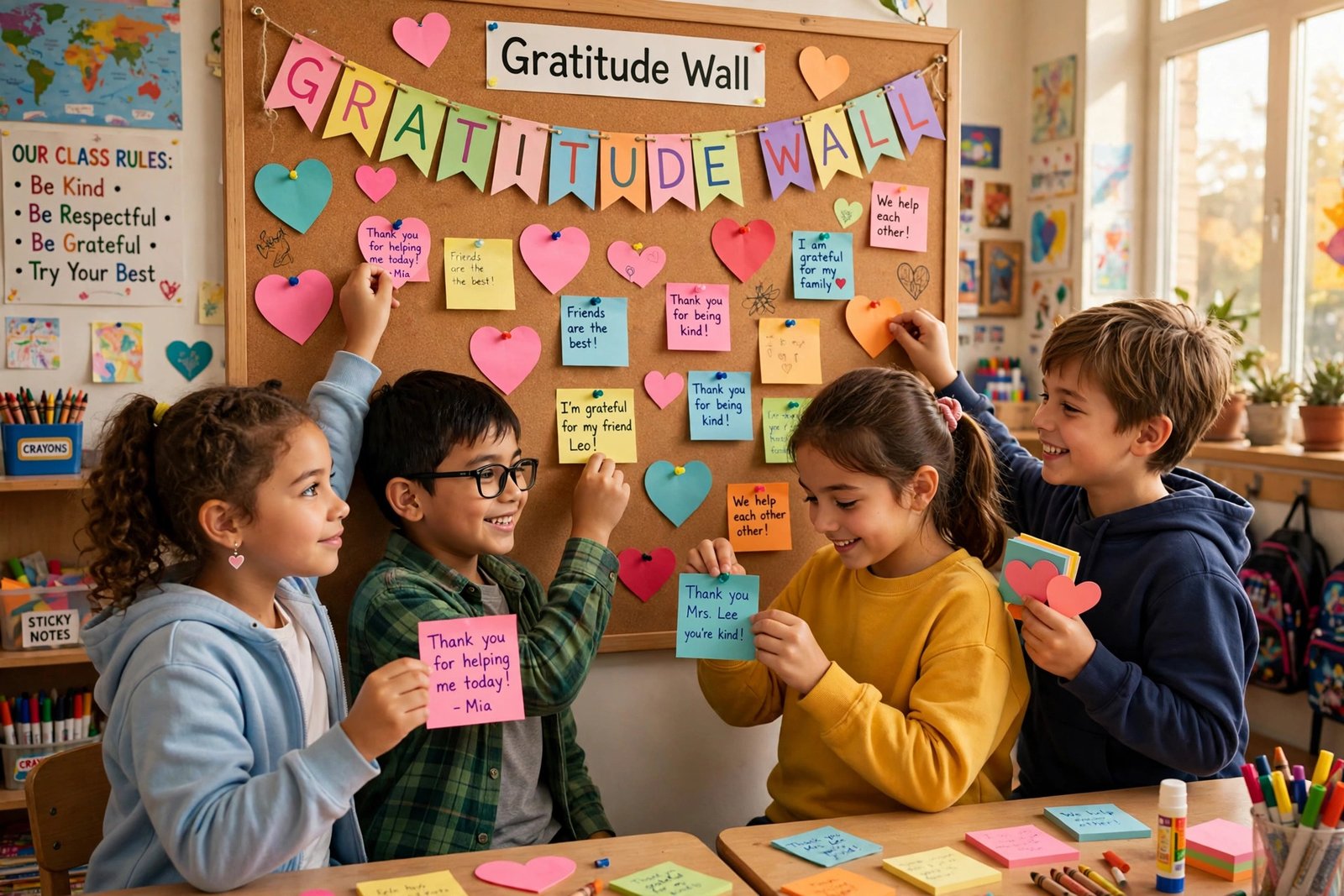

When was the last time a student looked at you and said thank you and really meant it? Not the quick thanks kids say because an adult is standing nearby, but the slow kind that comes with a smile and a real reason behind it? If you teach elementary school, you know how rare and how good that moment feels, and you also know it does not happen by accident.
Gratitude is a habit, and like reading or handwriting, kids get better at it when they practice it in small, regular ways. A child who says thank you every morning starts to notice kind acts during the rest of the day. A child who writes a thank you note starts to think about the people who help them, from the lunch server to the friend who shares crayons.
This list gives you 25 simple activities you can use all year, not just in November. Pick one or two to start, repeat the ones your class loves, and let the rest wait for a slow week. Each idea fits a normal classroom, uses materials you already have, and takes only a few minutes to set up.
Table of Contents
Morning Gratitude Routines
Mornings set the tone for the whole school day. A short gratitude routine at the start of class helps kids slow down, look around, and begin with a kind thought before the rush of lessons starts. These six ideas take ten minutes or less, and they work well as a daily habit.
1. Thank You Circle
Start the day with a short circle where each child names one person or thing they feel thankful for. Keep each share to one sentence so the circle stays quick and every child gets a turn. Pass a soft ball around the rug to show whose turn it is to speak. Model the first share yourself so kids see that small things count, like a warm lunch or a friend who saved a seat. If a child feels shy, let them pass and try again at the end.
2. Gratitude Morning Message
Write a short morning message on the board with a blank space for kids to fill in, such as Today I feel thankful for blank. As kids settle in, they copy the sentence into a notebook and finish it in their own words. Read three or four answers aloud while you take attendance, and praise the specific details kids share. Change the prompt each week so the answers stay fresh, and keep a few finished pages for a class display later in the month.
3. Two Good Things Share
Ask each child to name two good things from yesterday, one from school and one from home. Pair kids up so they can share with a partner first, which feels safer than speaking to the whole class. Then invite a few pairs to share with the group. This quick talk builds listening skills and helps kids see that good moments happen in ordinary places. Keep the shares short and move on while the energy is still high.
4. Gratitude Weather Check
Turn your morning weather check into a gratitude check by asking kids to name the feeling of the day and one thing that made them feel that way. A child might say sunny because a friend helped them with math, or calm because they read a good book last night. Write the words on a small chart and watch how the class mood changes over the week. This simple check helps kids link feelings to real events and gives you a quick sense of how the class is doing.
5. Morning Thank You Ticket
Give each child a small slip of paper as they walk in and ask them to write or draw one thank you before the bell rings. Younger kids can draw a picture, while older kids can write a short sentence naming a person and what they did. Collect the tickets in a basket and read two or three aloud during morning meeting. Kids love hearing their own words read out, and the tickets give you a quick pile of kind notes to display.
6. Gratitude Greeting at the Door
Stand at the door each morning and greet every child by name with a warm smile and a short question, such as what made you smile yesterday. Kids answer as they walk in, and you get a quick one to one moment with each of them. This greeting costs no materials and takes no extra time, but it tells kids they are noticed and welcome. Over time, kids start to bring their answers ready, and the line moves faster because they look forward to it.
Gratitude Activity Comparison
| Activity | Time Needed | What Kids Do | Skills Practiced |
| Thank You Circle | 5 to 10 minutes | Share one thank you aloud in a circle | Speaking and listening |
| Gratitude Journal Page | 10 to 15 minutes | Write or draw three thankful thoughts | Writing and reflection |
| Gratitude Tree | 20 to 30 minutes | Add paper leaves with thankful notes | Fine motor skills and teamwork |
| Gratitude Bingo | 15 to 20 minutes | Find classmates who match thankful prompts | Social skills and reading |
| Thank You Letter to a Classmate | 15 to 20 minutes | Write a short kind letter to a peer | Writing and empathy |
| Gratitude Jar | 5 minutes daily | Drop in a note about something good | Daily reflection and spelling |
Writing and Journaling
Writing gives kids time to slow down and think. When a child writes about gratitude, they have to pick one moment, find words for it, and explain why it mattered. These six writing ideas work for a wide range of ages, and you can adjust the length so younger kids draw more and older kids write more.
7. Gratitude Journal Page
Give kids a simple journal page with space for three short lines and one small drawing box. Each day they write three things they feel thankful for and add a quick sketch of one of them. Keep the writing time to ten minutes so it feels light, not like a test. Small daily entries build the habit far better than one long essay, and after a few weeks kids can flip back and see how many good things they noticed.
8. Thank You Letter to a Classmate
Ask each child to write a short letter to a classmate, naming one kind thing that person did and how it helped. Give them a simple frame to start, such as Dear blank, thank you for blank, it helped me because blank. Let kids decorate the letters and deliver them by hand at the end of the day. Reading a letter from a classmate means far more than a sticker, and kids often keep these notes in their desks for weeks.
9. Three Things List
Hand out a half sheet of paper and ask kids to list three things they feel thankful for today, with one short reason for each one. The reason is what makes this work, because it pushes kids past easy answers like my family and toward real details like my mom packed my favorite sandwich. Collect a few lists and read the best reasons aloud, then post them on a board. This quick list works well as a calm Friday wrap up or a quiet start after lunch.
I tried this in my class last month, and here is what happened. I asked my third graders to write three things with a reason for each one, and half the class wrote only one word answers with no reasons at all. I had rushed the directions and skipped my own example, so the next day I did one list on the board with them and we talked through each reason together. The second try worked much better, and two kids even asked if they could keep listing at home.
10. Gratitude Acrostic Poem
Write the word THANKFUL down the side of the board and help kids build a poem where each line starts with one of those letters. A line might read Thank you to the nurse who helped my knee, and the next might read Happy when my friend shares lunch. Work on the first poem together as a class, then let kids write their own with a word they choose, such as FAMILY or FRIEND. Display the poems in the hall so other classes can read them too.
11. Thank You Note to a School Helper
Pick one school helper each week, such as the custodian, the lunch server, the bus driver, or the school nurse, and have the class write short thank you notes to that person. Talk first about what the helper does each day, so kids understand the work behind the scenes. Kids can write two or three sentences or draw a picture with a short caption. Deliver the notes together as a class, and watch how proud kids feel when they see the helper smile.
12. Gratitude Story Starter
Give kids a story starter such as One day I felt so thankful when blank, and let them finish the story in a short paragraph or a full page, based on their age. Encourage them to include where they were, who was with them, and what happened next. This activity blends creative writing with real feelings, and the stories often surprise you with how much kids notice. Let a few kids read their stories aloud, and keep the best ones in a class book.
Crafts and Displays
Crafts make gratitude visible. When kids build something with their hands, the idea sticks in a way that a worksheet never does. These seven ideas turn thankful thoughts into displays the whole school can enjoy, and most of them use paper, crayons, and glue you already keep in the supply closet.
13. Gratitude Tree
Cut a large tree shape from brown paper and tape it to a wall or a bulletin board. Give each child a paper leaf and ask them to write or draw one thing they feel thankful for. Kids tape their leaves to the branches, and the tree fills up over a week or two. A growing display like this shows kids that gratitude adds up, and by the end of the month the bare branches turn into a full, colorful tree that visitors stop to read.
14. Thankful Handprint Wreath
Trace each child handprint on colored paper, cut the shapes out, and glue them in a circle to form a wreath. On each handprint, kids write one thing they feel thankful for, such as a pet, a teacher, or a favorite book. Hang the wreath on the classroom door so every visitor sees it when they walk in. Younger kids love the cutting and gluing, and older kids enjoy picking just the right thankful thought for their handprint.
15. Gratitude Jar
Place a large clear jar on a shelf with small slips of paper and pencils beside it. All week long, kids can drop in a note about something good that happened, such as a friend helped me or I finished my book. On Friday, pull out a few notes and read them aloud to the class. This jar takes almost no time to run, and it teaches kids to notice good moments as they happen instead of only thinking about them when a teacher asks.
16. Thank You Card Station
Set up a small table with folded card stock, crayons, markers, stickers, and a list of people kids might thank. During free choice time, kids can make a card for anyone they choose, from a parent to a coach to a neighbor. Keep the station open for a week so kids can return to it more than once. A handmade card takes more care than a quick note, and kids learn that a little extra effort makes a thank you feel even more special.
17. Gratitude Quilt Squares
Give each child a paper square and ask them to draw one thing they feel thankful for, with a short label under the picture. Tape the squares together on a board in a quilt pattern, with no gaps between them. Talk about how each square is different but they all fit together to make one warm class quilt. This display works well for a parent night or an open house, because families love finding their own child square in the pattern.
18. Thankful Leaf Garland
Cut leaf shapes from fall colored paper and punch a hole at the top of each one. Kids write one thankful thought on each leaf, then you string the leaves together with yarn to make a garland for the classroom. Hang it across a window or along a wall where the light catches the colors. This garland is easy to refresh, because you can add new leaves each week and take down the oldest ones to send home with kids.
19. Gratitude Photo Wall
Ask families to send in a photo of something their child feels thankful for, such as a pet, a grandparent, or a favorite place. Print the photos or display them on a screen, and let each child tell the class why they picked that photo in one or two sentences. This wall brings home life into the classroom and helps kids learn about each other. If a family cannot send a photo, let the child draw a picture instead so every child has a spot on the wall.
Games and Sharing
Games turn gratitude into something kids ask for again. When thankful talk feels like play, even quiet kids join in, and the class builds a shared language for kind acts. These six ideas work well on a Friday afternoon, during a morning meeting, or as a calm filler when a lesson ends early.
20. Gratitude Bingo
Make a simple bingo card with squares that name kind acts or thankful moments, such as someone helped me, I shared my snack, or I said thank you today. Kids walk around the room and find classmates who can sign a square that fits their day. The first child to fill a row calls out bingo, but the real win is the talk that happens while kids search for matches. Print fresh cards each time so the game stays new.
21. Pass the Thank You Ball
Sit the class in a circle and pass a soft ball from child to child while music plays. When the music stops, the child holding the ball names one person they feel thankful for and says why in one short sentence. Then the music starts again and the ball keeps moving. A moving game like this keeps energy high and gives shy kids a clear turn to speak, because everyone knows the ball will come around again and no one has to raise a hand to be picked.
22. Gratitude Scavenger Hunt
Give kids a short list of thankful things to find in the classroom or the school, such as something that helps you learn, something that makes you laugh, or someone who keeps you safe. Kids work in pairs and write down what they find for each clue, then share their answers with the class. This hunt gets kids moving and looking closely at a place they see every day. It also helps them notice the small helpers and tools they usually walk right past.
23. Thank You Charades
Write kind acts on slips of paper, such as helping a friend pick up books, sharing crayons, or holding the door. One child picks a slip and acts it out without words while the class guesses what kind act it shows. After each guess, ask the class to name a time someone did that kind act for them. This game builds quick thinking and reminds kids that kind acts are easy to spot once you start looking for them in daily life.
24. Gratitude Interview
Pair kids up and give them three interview questions, such as who helped you this week, what made you smile today, and what are you looking forward to tomorrow. Each child interviews their partner and takes short notes, then reports back to the class in one or two sentences. This activity builds speaking and listening skills in a low pressure way, because kids talk to one friend first and only share a short report with the group. Swap partners each time so kids meet new classmates.
25. Class Gratitude Chain
Cut long strips of colored paper and ask each child to write one thankful thought on a strip. Link the strips together into a paper chain and hang it across the classroom. Add new links each week so the chain grows longer and longer as the year goes on. Kids love to see the chain stretch across the room, and it gives the class a clear picture of how many thankful thoughts they have shared together since the first day.
Frequently Asked Questions
How often should I teach gratitude in my classroom?
Teach it in short moments every day rather than one long lesson once a month. A five minute morning share or a quick journal entry builds the habit far better than a single big project. Kids need steady practice to notice kind acts on their own, and a daily routine gives them that chance without taking time from core lessons.
What if some kids say they have nothing to feel thankful for?
Start small and stay patient, because some kids need help seeing the good in an ordinary day. Offer easy prompts such as a favorite food, a warm coat, or a friend who sat with them at lunch. Let them draw instead of write if words feel hard, and never force a share in front of the class. Most kids open up once they hear classmates name simple, everyday things.
How do I fit gratitude activities into a busy school day?
Pick the shortest ideas first, such as a morning circle, a thank you ticket, or a gratitude jar note. These take five minutes or less and fit into time you already have, like morning meeting or the last minutes before dismissal. Save the longer crafts for a Friday afternoon or a slow week, and treat them as a reward rather than one more task on a crowded day.
Can younger kids do these activities too?
Yes, most of these ideas work well for first and second grade with small changes. Let younger kids draw their answers instead of writing full sentences, and keep shares to one short phrase. Read the prompts aloud, model each step yourself, and pair younger kids with a buddy who can help with cutting or spelling. The ideas stay the same, only the writing load changes.
How do I keep gratitude from feeling forced or fake?
Keep the tone light and let kids choose what they share, because forced thanks teach kids to perform rather than feel. Never grade a gratitude journal or correct a child answer, and model honest thanks yourself by naming real moments from your own day. When kids see that small, true answers count more than big, perfect ones, the shares start to sound real.
Should I send gratitude activities home for families?
Yes, a simple home activity once a month works well and helps families join in without adding homework stress. Try a thank you note to a family member, a gratitude jar on the kitchen table, or a short list of three good things from the week. Keep it optional and short, and invite kids to share what happened at home if they want to, but never require a family report.
Final Thoughts
Gratitude grows when kids practice it in small, steady ways, not when they hear one big speech about being thankful. Pick the ideas that fit your class, your time, and your kids, and start with just one this week. A morning circle, a thank you note, or a paper chain on the wall can change how a classroom feels, one kind word at a time. When kids learn to notice the good around them, they carry that habit home, out to the playground, and into the rest of their lives, and that is a lesson worth building into every school day.
