
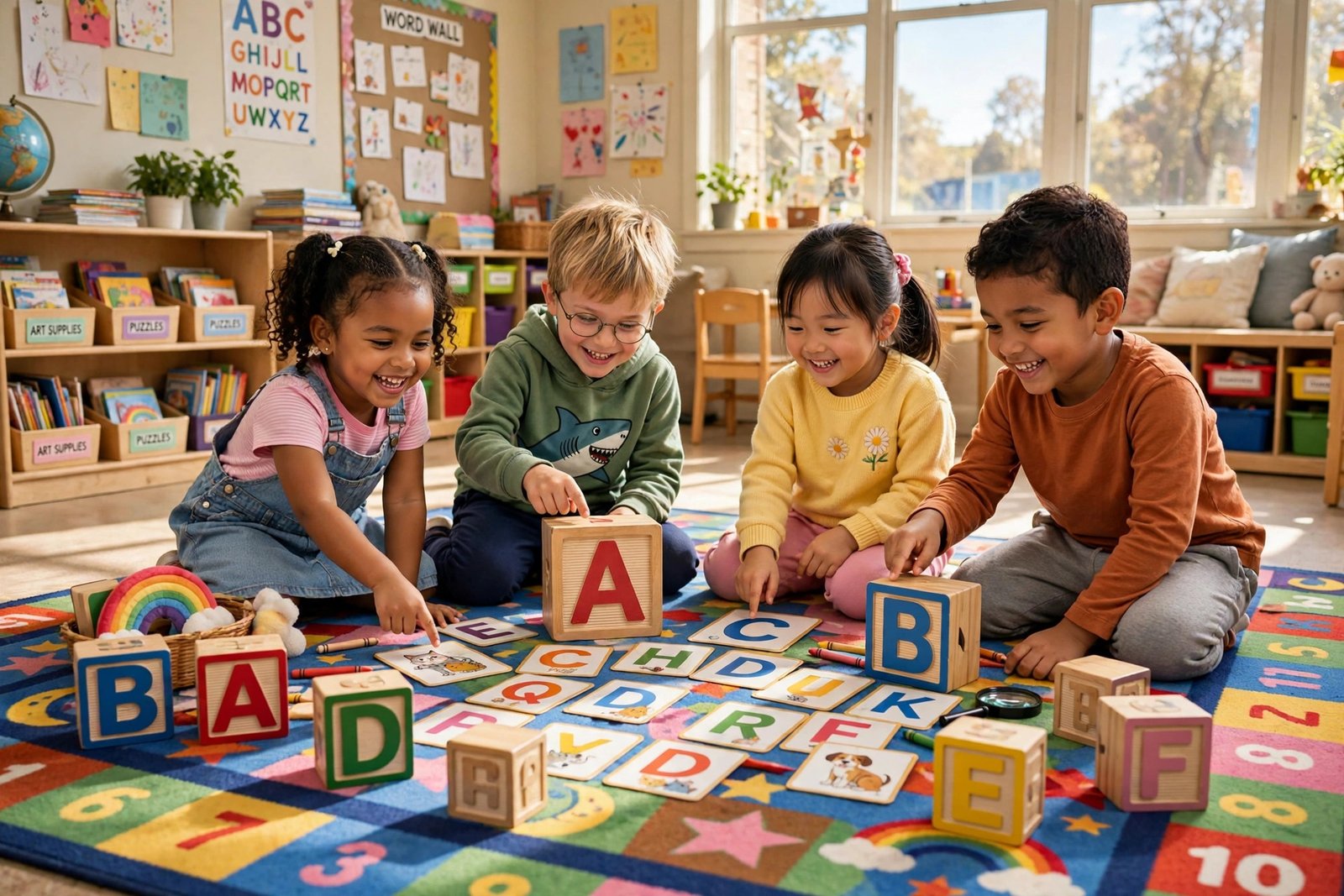

It was a rainy Thursday morning, and the preschool room smelled faintly of wet coats and crayons. Leo, one of my four year olds, was sitting at the snack table with a box of cereal in front of him. He was not eating. He was staring at the big red letter on the front of the box, and then he looked up at me with the serious face children wear when they have figured something out. He pointed at the letter and said that it was the same letter as the one at the start of his name. He was right. It was an L, and Leo starts with L.
That little moment stayed with me all day, because it showed how letters click for preschoolers. They do not learn the alphabet by sitting still and staring at a chart. They learn it by touching letters, singing them, hunting for them, building them, and bumping into them in the middle of ordinary play. A letter becomes real when a child can hold it in their hands or spot it on a cereal box at snack time. This list gives you twenty five activities that work in a real preschool classroom, with real four year olds, real attention spans, and real time limits. Every activity uses materials you probably already have, and every one fits inside a normal school day.
Table of Contents
Letter Recognition Games
Games are the easiest way to teach letter names, because children forget they are learning while they play. These five games all ask children to spot a letter, say its name, and match it to something they know. Keep a set of big letter cards handy, because you will reach for them again and again.
1. Alphabet Bingo
Make simple bingo cards with nine squares, each square holding one big letter. Give every child a card and a small pile of buttons to use as markers. Call out a letter name and its sound, then wait while the children hunt for it on their cards. When a child covers a full row, they call out bingo and win a sticker. Say the letter sound every time you call a letter, so children link the shape to the sound.
2. Letter Fishing
Cut small fish shapes from card and write one letter on each fish. Clip a paper clip to the nose of every fish, then lay them face down in a shallow tray or a blue cloth sea. Give each child a stick with a string and a magnet tied to the end. Children fish for a letter, reel it in, and name the letter they caught. If they name it right, they keep the fish.
3. Alphabet Scavenger Hunt
Hide big letter cards around the classroom, one letter per hiding spot. Give each child a clipboard with a simple checklist of the letters they need to find. Children walk around the room, spot a letter, and tick it off their list. When they find all their letters, they read them out loud to you. Start with just five or six letters so younger children do not feel lost.
4. Letter Matching Memory
Make pairs of cards with the same letter, one card in uppercase and one in lowercase. Lay the cards face down in neat rows on a table or rug. Children turn over two cards and try to find a matching pair, saying each letter name out loud as they turn it. If the cards match, the child keeps the pair. If they do not match, the cards go back face down.
5. Mystery Letter Bag
Put plastic letters or wooden letters in a cloth bag, one letter at a time. A child reaches into the bag without looking, feels the letter shape with their fingers, and tries to guess which letter it is. Then they pull it out and check. Use chunky letters that are easy to grip, and start with letters from the children own names, because those are the ones they care about most.
Hands On Letter Play
Preschoolers learn with their hands first and their eyes second. These five activities let children build, squeeze, and shape letters with real materials. The mess is part of the learning, so set up trays and smocks before you begin.
I tried the salt tray letters with my class last month, and the first tray did not go quite as planned. I poured in too much salt, and the letters vanished under a white drift. The children just laughed and swept the salt into little piles with their fingers. We fixed it by using a thin layer the next day, and after that the letters showed up clear as day. One quiet girl traced her whole name in the tray, then looked up at me and said it was her favorite thing that week.
6. Play Dough Letters
Roll out play dough into long snakes and show children how to bend each snake into a letter shape. Start with easy letters like C, O, and L, then move on to trickier ones like B and R. Put a printed letter card beside each child so they can copy the shape. Keep a small rolling pin and a plastic knife nearby, so children can cut and shape the dough themselves. This builds hand strength for writing later.
7. Letter Building With Blocks
Set out wooden blocks, magnetic tiles, and craft sticks on a rug. Show children how to build letters from straight lines and curves, using two sticks for a T or three sticks for an A. Let them build letters freehand, then ask them to copy a letter card you hold up. This activity teaches children that letters are made of parts, and that the parts fit together in a certain order.
8. Salt Tray Letters
Pour a thin layer of salt or fine sand into a shallow tray, just enough to cover the bottom. Show a child a letter card, then let them trace the letter in the salt with one finger. A gentle shake levels the tray for the next try. Use a dark tray so the white salt shows up clearly, and keep a small brush nearby for children who want to smooth the tray neatly.
9. Alphabet Sensory Bin
Fill a large tub with dried rice, beans, or shredded paper, then bury plastic letters inside. Give children small scoops and cups, and let them dig for letters. When a child finds a letter, they name it and place it on a sorting mat beside the tub. You can ask children to find the first letter of their name, or to collect all the letters in one color.
10. Sticker Letter Collage
Draw a giant letter on a big sheet of paper, one letter per sheet. Set out bowls of stickers, torn paper, and dot markers. Children fill in the giant letter by sticking and gluing inside the lines. This activity is calm and quiet, so it suits the end of a busy morning. Choose one letter per day and display it on the wall, so the class builds a whole alphabet display over time.
Alphabet Activity Comparison
Use this quick guide to pick the right activity for your day. Some activities are calm and tidy, and some are gloriously messy. Prep time is a rough guide for a class of twenty children with one adult helping.
| Activity | Best Age | Prep Time | What You Need |
|---|---|---|---|
| Alphabet Bingo | 4 to 5 | Low | Letter cards, buttons, stickers |
| Letter Fishing | 3 to 5 | Medium | Card fish, magnets, string, sticks |
| Alphabet Scavenger Hunt | 4 to 5 | Low | Letter cards, clipboards, checklists |
| Play Dough Letters | 3 to 5 | Low | Play dough, letter cards, rolling pins |
| Salt Tray Letters | 3 to 5 | Low | Trays, salt, letter cards |
| Alphabet Sensory Bin | 3 to 4 | Medium | Tub, rice, plastic letters, scoops |
| Alphabet Freeze Dance | 3 to 5 | Low | Music player, letter cards |
| Letter Hopscotch | 4 to 5 | Medium | Chalk, letter cards, beanbags |
| Name Puzzle | 4 to 5 | Medium | Card, markers, scissors |
| Alphabet Stamping | 3 to 5 | Low | Letter stamps, ink pads, paper |
Alphabet Songs and Movement
Music and movement lock letters into memory in a way that sitting still never does. These five activities get children singing, dancing, and jumping their way through the alphabet. Use them when energy is high, or when you need to break up a long stretch of table work.
11. Alphabet Freeze Dance
Play music and let the children dance around the room. When the music stops, hold up a big letter card and call out its name. Children freeze in place and shout the letter name back to you. If they get it right, they keep dancing. If they are unsure, help them say it together as a group. Use letters the class is learning that week, so the game reinforces your current lessons.
12. Letter Hopscotch
Draw a hopscotch grid outside with chalk, and write one letter in each square. Children toss a beanbag onto a square, hop to it, and say the letter name out loud. On the way back, they say the sound the letter makes. This game mixes big body movement with letter practice, and it works well in pairs. If it rains, draw the same grid indoors with masking tape on the floor.
13. Alphabet March
Line the children up and march around the room while chanting the alphabet together, one letter per step. Stop at a letter and ask the children to name something that starts with it. March on again, and stop at a new letter. This simple activity needs no materials at all, so it is perfect for a spare five minutes before lunch. Clap on every letter to keep the beat steady, and let a different child choose the stopping letter each time.
14. Letter Yoga
Assign a simple body pose to a few letters, like arms up high for T or curled small for C. Call out a letter and children make the pose, holding it for a few seconds while they say the letter name. This activity calms a busy class while still teaching letters, and it works well as a transition between activities. Keep the poses simple and safe, and let children suggest new poses for letters.
15. Alphabet Action Song
Pick a familiar tune and write a simple verse for the letters you are teaching that week. Each letter gets its own action, like waving for W or jumping for J. Sing the verse together a few times, then let children take turns leading the actions. Repeat the same song for a whole week, because repetition is what moves the letters into long term memory.
Letters in Everyday Play
Letters show up everywhere once children start noticing them, on signs, on boxes, on shirts, and on the classroom door. These five activities help children spot letters in the world around them, and use letters as part of normal play.
16. Name Puzzle
Write each child name in big letters on a strip of card, then cut the strip into one piece per letter. Mix the pieces up and let each child put their own name back together in order. Start with shorter names, then move to longer ones as children get confident. Store each puzzle in a labeled envelope, so children can find their own name quickly and play again during free choice time.
17. Alphabet Snack Sort
At snack time, lay out letter shaped crackers or cut sandwiches into letter shapes with cookie cutters. Ask each child to find the first letter of their name on their plate and say it out loud before eating it. This takes almost no extra time, and children think it is hilarious to eat a letter.
18. Letter Hunt in Books
Give each child a picture book and a letter to hunt for. Children flip through the pages and point to every time they spot their letter, in the title, in the words, or in the pictures. When they find one, they tap it and say the letter name. Choose books with big, clear print, because small text is hard for little eyes to scan. This turns quiet reading time into an alphabet game.
19. Dress Up Letter Shop
Set up a pretend shop in the play corner, with price tags and signs made from letter cards. Children take turns being the shopkeeper, writing simple signs and reading the letter tags to their customers. Give them a toy till, some play money, and a basket of pretend food or toys. The shopkeeper has to read the first letter of each item to sell it.
20. Alphabet Mailbox
Set up a small mailbox or a decorated box in the classroom, with a slot on top. Give children envelopes with a letter written on the front, and ask them to post the envelope that matches the letter you call out. Once a week, open the mailbox together and read out all the letters inside. Let children draw a picture to go with their letter, so the envelope feels like real mail and not just a worksheet.
Writing and Tracing Fun
Writing comes last for a reason. Children need to know a letter, say its name, and feel its shape before they pick up a pencil. These five activities make first writing fun instead of frustrating. Keep the tools chunky, the paper big, and the pressure low.
21. Rainbow Tracing
Write a big letter on a sheet of paper with a thick marker. Give the child four or five crayons in different colors. They trace over the same letter again and again, once with each color, until the letter looks like a rainbow. Each trace builds muscle memory, but the child only sees colors and fun. Use chunky crayons that are easy to grip, and praise the effort rather than the neatness.
22. Alphabet Stamping
Set out letter stamps, ink pads, and big sheets of paper. Children press a stamp into the ink pad, press it onto the paper, and say the letter name out loud. They can stamp the letters of their name in order, or stamp the letters you call out. This activity is quick to set up and easy to clean, because the stamps do the hard work. Stamping suits children who find pencil control tricky,.
23. Chalkboard Letter Practice
Give each child a small chalkboard and a piece of chalk. Call out a letter, show it on a card, and let the children draw it on their boards. A quick wipe with a cloth erases the letter for the next try, so children are not afraid of mistakes. This low pressure practice is perfect for children who worry about getting things wrong on paper. Let children wipe their own boards, because the wiping is half the fun.
24. Letter Tracing With Cars
Draw a big letter on a large sheet of paper, with a thick road line following the shape of the letter. Give children small toy cars and let them drive along the road, following the letter shape from start to finish. Children who love vehicles will trace a letter ten times without noticing. Say the letter name each time a car finishes the route.
25. My Alphabet Book
Give each child a small blank book made from folded paper, with one page per letter they are learning. On each page, the child draws or sticks a picture of something that starts with that letter, and you help them write the letter beside it. Work on one page a day, so the book grows slowly over the unit. Let children choose their own pictures, because a book they made themselves is a book they will read again and again.
Frequently Asked Questions
How long does each alphabet activity take
Most activities in this list take between fifteen and thirty minutes, including setup and cleanup. Music and movement games take about ten minutes, while play dough and collage activities can stretch to forty minutes if children are really engaged.
What age are these alphabet activities for
These activities suit children aged three to five, and the comparison table near the middle of this list shows which activities fit each age. Three year olds do best with big movements, songs, and sensory play, while four and five year olds enjoy tracing, stamping, and name puzzles.
Should I teach uppercase or lowercase letters first
Start with uppercase letters, because they are bigger, simpler, and easier to tell apart. Once children know most uppercase letters, introduce the lowercase version beside it, so they learn the pair together. The memory matching game in this list teaches both forms side by side, which helps children link them naturally.
How do I help a child who mixes up similar letters
Mix ups are normal at this age, especially with letters like b and d or p and q. Use a simple trick for each pair, like a bed shape for b and d, and repeat it every time the letters come up. Give the child extra practice with hands on activities like play dough and salt trays, where they can feel the shape.
Can these activities work for a mixed age group
Yes, and the comparison table near the middle of this list shows which activities suit each age. Younger children do best with big shapes, songs, and sensory bins, while older children enjoy tracing, writing, and more detailed games.
What if a child is not interested in letters yet
Do not push it, because pressure turns children off letters fast. Start with the activities that feel like play, like the sensory bin, the freeze dance, or the letter fishing game. Slip letters into things the child already loves, like cars, snacks, or dress up. When a child finds their own first letter in their name, interest usually follows.
Final Thoughts
Alphabet activities work so well in preschool because they are simple on the surface and rich underneath. Children practice looking, listening, touching, and moving, and they do it while playing games they actually enjoy. They learn that a letter has a name, a sound, and a shape, they see letters in books and on boxes, and they tell stories about what they found. Start with one activity from this list, and see how your class responds. If the table is quiet and focused, try a writing activity next time. If the room is full of energy, pick a movement game and let them dance their way through the alphabet.
