

Table of Contents
Here is what you need before you start. You do not need a big budget or a full weekend to get your classroom library in shape. You need sturdy bins or baskets, a marker, tape, and labels you can read from across the room. You need a small shelf or table you can reach without moving furniture around. You need a return bin, a checkout sheet or card system, and one quiet corner where kids can sit and read. That is it. Once you have those basics, you can sort, label, and set up routines that keep books in order all year.
A classroom library works best when kids can find a book on their own, put it back on their own, and feel excited to try something new. That takes a little planning up front, but it saves you time every week after that. The ideas below are simple, cheap, and easy to adjust for first grade through fifth grade. Pick a few to start with, then add more as your class gets used to the system.
Start Simple: Sort First, Label Second
Do not try to organize everything in one day. Start with a rough sort, then refine it once you see how your students use the books. Pull out damaged books and books that no longer fit your class. Then sort what is left into groups that make sense to a child, not just to an adult.
1. Sort by Reading Level With Colored Dots
Put a small colored dot sticker on the spine of each book to show its reading level. Use one color for early readers, one for developing readers, and one for confident readers. Keep a simple chart on the shelf so kids know which color to pick. Teach the system in one short lesson, then let students practice finding a book in their color. This helps kids choose books they can actually read, and it cuts down on books being put back in the wrong spot.
2. Use Labeled Picture Bins for Young Readers
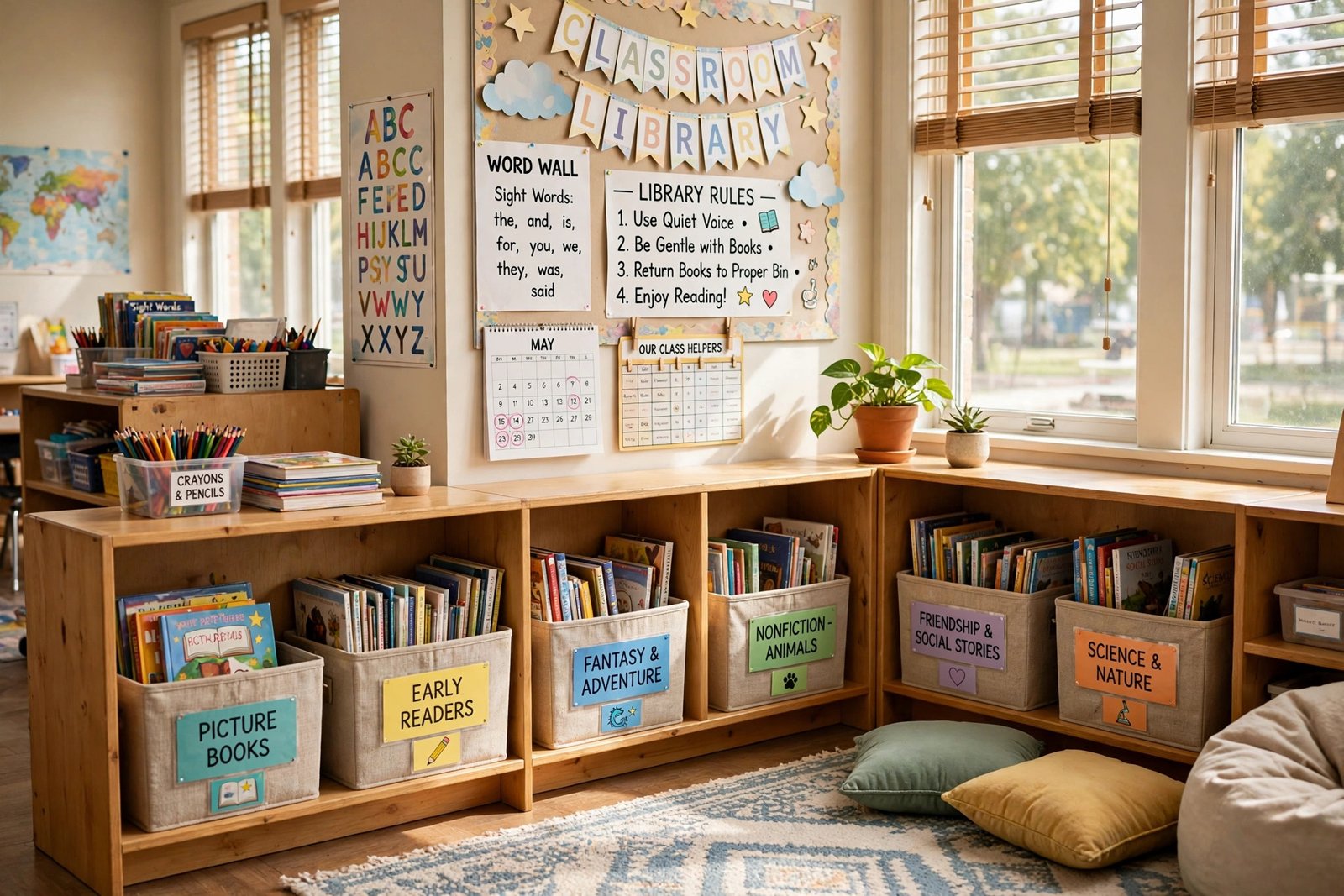
For kindergarten through second grade, picture labels matter as much as words. Use a bin for each group of books and tape a label on the front with both the word and a simple picture, such as a dog for animal books or a star for space books. Keep bins low, open at the top, and light enough for a child to pull out and slide back. When kids can match the picture on the book bin to the picture on the shelf label, cleanup becomes much faster.
3. Set Up Genre Tubs for Older Elementary Students
Third through fifth graders are ready for genre tubs. Make tubs for mystery, funny stories, adventure, realistic fiction, and nonfiction. Add a short description on each tub in plain words, such as "funny stories that make you laugh" so kids are not guessing. Rotate one or two tubs to the front each month so a quiet genre gets fresh attention. Genre tubs help students branch out without feeling pushed into a book they do not want.
4. Make Author Baskets for Favorite Writers
When your class falls in love with one author, give that author a basket of their own. Fill it with every book by that author you own, plus a small card that lists the titles in order if it is a series. Author baskets work well because kids trust a writer they already enjoy. Keep the basket near the front so it is easy to spot during independent reading time.
5. Group Series Books Together in Order
Series books cause the most shelf mess because kids hunt for book two or book three. Keep each series together in one bin or on one short shelf section, and number the spines with a marker or sticker so the order is clear. Put a small card in the bin that lists the series order. When a student finishes one book, they can grab the next one without asking you. This one small step prevents a lot of daily searching and reshelving.
| Organization method | Best for | Cost and effort | Upkeep |
|---|---|---|---|
| Colored dot reading levels | Helping kids pick books they can read | Low cost, one afternoon to dot books | Recheck dots when new books arrive |
| Picture bins | Kindergarten through second grade | Low cost, bins and printed labels | Straighten bins during weekly tidy time |
| Genre tubs | Third through fifth grade | Low to medium cost, tubs and labels | Rotate tubs once a month |
| Series bins in order | Classes hooked on a series | Very low cost, number stickers only | Check order when books come back |
| Checkout clipboard | Any grade, small libraries | Almost free, paper and a pencil | One minute a day to check returns |
Make Browsing Easy for Young Readers
Kids browse with their eyes first. If books are packed spine out in a tight row, young readers will pull out the same five books again and again. Give them ways to see covers, spot new titles, and find a book that fits their mood. A few display tricks can change how much your library gets used.
6. Face Books Forward on a Display Ledge
Set aside one low shelf or ledge where books face forward, cover out. Change the books on this ledge every week or two, and pick a mix of old favorites and titles kids have missed. Forward facing books catch the eye, especially for reluctant readers who will not dig through a packed shelf. Keep it small so it stays fresh and easy to restock.
7. Split Fiction and Nonfiction Clearly
Young readers get confused when storybooks and fact books are mixed together. Put fiction on one side and nonfiction on the other, with a clear sign for each side. Inside nonfiction, use simple topic groups such as animals, space, sports, and how things work. Teach kids the difference in one lesson with two example books, then point to the signs each time you send them to browse. This split helps students who love facts find their books fast.
8. Create Topic Tubs for Class Units
When you teach a unit on plants, weather, or communities, pull related books into a topic tub and place it near your teaching area. Label the tub with the topic name and a picture. Students can grab background reading during the unit without hunting through the whole library. When the unit ends, return the books to their home bins. Topic tubs make your library feel useful right now, not just a shelf kids visit during free time.
9. Add a Shelf Map With Pictures and Words
Tape a simple map of your library on the end of a shelf or on the wall beside it. Draw boxes for each section, such as animal books here, funny books there, and new books by the window. Use pictures for younger grades and words for older ones. A shelf map gives new students confidence on day one, and it helps a substitute or helper put books back in the right place.
10. Keep a New Books Spotlight Shelf
Kids love what feels new, even if the book has sat on your shelf for a year. Set up a small spotlight shelf for books that are new to the class, newly donated, or just rediscovered. Add a small sign that says "New to Our Class" and swap the titles every two weeks. Let students vote for one book to add to the spotlight shelf each month. This shelf keeps excitement up without you buying a single new book.
11. Use Table Tubs for Desk Reading
Fill a small tub for each table group with five to eight books at mixed levels and topics. Students can read from the table tub during morning work or when they finish early, without a trip across the room. Swap the books in each tub every two weeks so the choices stay fresh. Table tubs cut down on traffic around the main library, and they give shy readers a low pressure way to pick up a book right at their seat.
Keep Books Moving: Checkout and Returns
A library system only works if books come back. The best checkout system is the one your students can run without you standing over it. Keep it simple, visible, and part of the daily routine, and teach it like any other classroom procedure.
12. Use a Simple Sign Out Clipboard
Hang a clipboard near the library with columns for name, book title, and date. When a student takes a book home or to their desk for the week, they write it down. When the book comes back, they cross it off. This system costs almost nothing, and it teaches responsibility in a clear way. Check the clipboard once a day during a quiet moment, and follow up gently with any student who has had a book out for more than a week.
13. Try Book Pocket Cards for Younger Classes
For younger students who cannot yet write titles quickly, use pocket cards. Tape a small pocket inside the front cover of each book with a card that shows the title. When a child borrows the book, they move the card to a pocket chart with their name on it. When the book returns, the card goes back in the book. This visual system is easy for first and second graders, and it lets you see at a glance which books are out and who has them.
14. Set Up a Clear Book Return Bin
Place one return bin right by the library entrance, clearly labeled "Return Books Here" with a picture of a book going into a bin. Teach students to drop books in the bin, never to reshelve them on their own. This one rule prevents most misshelving, because you or your student librarian can reshelve from the bin correctly. Empty the bin once a day, or assign that job to a student helper. A return bin keeps shelves neat even on busy days.
I tried this in my class last month, and here is what happened. I moved the return bin right next to the door instead of tucked behind a shelf, and I put a big label on it that kids could read from the rug. Within a week, almost every book came back through the bin instead of ending up sideways on a random shelf. One student still forgot twice, so I taped a small reminder card on his desk for a few days, and that fixed it. It was a small change, but it saved me a lot of reshelving time.
15. Assign Student Librarian Jobs
Give two or three students the job of classroom librarian each week. Their tasks are simple: empty the return bin, reshelve books, straighten bins, and check the spotlight shelf. Teach the job with a short checklist they can follow, and rotate the role so many kids get a turn. Student librarians take pride in the library, and they learn how the system works from the inside.
16. Set a Weekly Book Swap Day
Pick one day each week as book swap day. On that day, students return finished books, pick a new one, and update the checkout sheet. Keep the routine short and calm, with a few students browsing at a time while others read. A set swap day prevents the rush of everyone swapping books at once, and it gives you a regular moment to notice which books are popular and which ones never move. You can use that note to plan your next display or rotation.
Make the Library a Place Kids Love
Organization is not just about bins and labels. It is also about making the space feel welcoming, so kids want to spend time there. A cozy, calm corner with a few thoughtful touches will get more use than a perfect shelf in a bare corner.
17. Build a Cozy Reading Corner With Simple Seating
Use a rug, a couple of cushions, and a small lamp if you have one to mark off a reading corner. Keep seating low and easy to move, such as floor cushions or bean bags, and set a clear limit on how many kids can sit there at once. A cozy corner signals that reading is a treat, not just a task. Keep the area tidy by making "leave it neat for the next reader" part of the routine.
18. Add a Student Recommendation Shelf
Let students recommend books to each other with a small recommendation shelf. When a child finishes a book they loved, they fill out a short card with the title and one sentence about why they liked it. Clip the card to the front of the book or place it beside it on the shelf. Other kids trust a classmate's pick more than a teacher's list, and reluctant readers often try a book because a friend liked it. Swap recommendation cards as books get borrowed so the shelf stays current.
19. Create a Listening Corner for Audio Books
Set aside a small basket for audio books and a listening spot with headphones if your school allows them. Label the basket clearly and include a simple direction card for how to start and stop the audio. A listening corner supports students who are still building reading fluency, and it gives kids another way to enjoy a story. Keep the basket small, with four to six titles at a time, and rotate them every few weeks.
20. Display Student Work Next to the Library
Hang a small board beside the library for student book reviews, drawings of favorite characters, or short "why I liked this book" notes. Change the display every few weeks so new students get featured. This board makes the library feel like it belongs to the class, not just to the teacher. It also gives kids a reason to walk over and pick up a book they had not noticed before.
21. Rotate Books Seasonally From a Storage Box
Keep one storage box of books out of the main library for seasonal or holiday titles. Bring out fall books in autumn, winter stories in winter, and spring science books when the weather changes. Swap a small set at a time, not the whole library, so the change feels exciting but not overwhelming. Seasonal rotation keeps your library feeling new all year, and it helps you use books you already own instead of buying more.
Keep It Tidy All Year Without Extra Work
The hardest part of a classroom library is not setting it up. It is keeping it tidy in week ten, week twenty, and week thirty. Build small routines into your day so tidying takes minutes, not a full afternoon. When kids own the routine, the library stays in shape with very little effort from you.
22. Run a Five Minute Friday Library Reset
Every Friday, spend five minutes on a library reset. Students straighten bins, push books upright, return stray books to the return bin, and check that labels are still visible. Play quiet music and make it a calm end of week job, not a punishment. A short weekly reset prevents the slow slide into mess that happens when small problems pile up. If Friday is busy, move the reset to any day that works, but keep it weekly.
23. Keep a Book Repair Station Ready
Set up a small repair station with clear tape, a glue stick, sticky notes, and a box labeled "Books That Need Help." Teach students to place a damaged book in the box instead of trying to fix it themselves or hiding it on a shelf. Check the box once a week and repair what you can in a few minutes. A repair station saves books from getting worse, and it teaches kids to care for shared materials.
24. Use a Donation and Swap Box for Extra Books
Keep a box for donated books and books students have outgrown. Check donations before adding them to the library, and set aside any that are too worn, too hard, or not right for your class. Once a term, let students swap a book they have finished at home for one from the swap box, with your okay. A swap box keeps your collection fresh, clears out books no one reads, and gives families a simple way to help without spending money.
25. Do a Quick End of Term Library Check
At the end of each term, do one quick check of the whole library. Count which bins are empty, which books are missing from the checkout sheet, and which labels need replacing. Move books that never get picked into a different spot or pair them with a display card. This check takes less than an hour, and it stops small gaps from turning into a messy shelf. Start the next term with a tidy library, and your students will treat it with more care.
Here is a simple setup list to follow in order. First, pull out damaged and out of level books. Second, sort the rest into broad groups that make sense to kids. Third, label every bin with words and pictures. Fourth, set up the return bin and checkout system, and teach both in one lesson. Fifth, add one display shelf and one cozy seating spot. Sixth, assign student librarians and start the Friday reset. Work through this list over two weeks, not one day.
Frequently Asked Questions
How many books should an elementary classroom library have?
Aim for a collection that gives every student real choice without overwhelming your shelves. A good starting point is ten to twenty books per student, with a mix of levels, topics, and formats. If your collection is smaller, focus on variety and rotation rather than total count.
How do I organize books when students read at very different levels?
Use colored dots or simple level labels, and teach students to pick from their color or level range first. Keep a free choice shelf too, so strong readers can stretch and struggling readers can enjoy picture books without feeling singled out. The goal is guidance, not strict limits.
What is the easiest checkout system for a busy classroom?
A sign out clipboard or pocket card system is usually easiest, because it takes seconds and students can run it themselves. Pick one system, teach it clearly, and keep it in the same spot every day. Avoid a system that needs you to log every book by hand, since that will fall apart on busy weeks.
How often should I rotate books in the library?
Rotate display books every one to two weeks, and rotate table tubs and topic tubs when a unit changes or interest drops. You do not need to move the whole library at once. Small, regular swaps keep the collection feeling fresh and help quiet titles get noticed.
How do I get students to put books back correctly?
Teach one clear rule, which is to return books to the return bin, not to the shelf. Add picture labels, assign student librarians, and run a short weekly reset. Praise the class when the library stays tidy, and reteach the routine after breaks.
Final Thoughts
A well organized classroom library does not need to look perfect. It needs to work for real kids on real school days, with books they can find, borrow, return, and love. Start with a simple sort, clear labels, and a return routine, then add displays and cozy touches as you go. Let your students help run the library, and let the system grow with them through the year. When kids can find a good book on their own and put it back without a fuss, reading time gets easier for everyone.
