
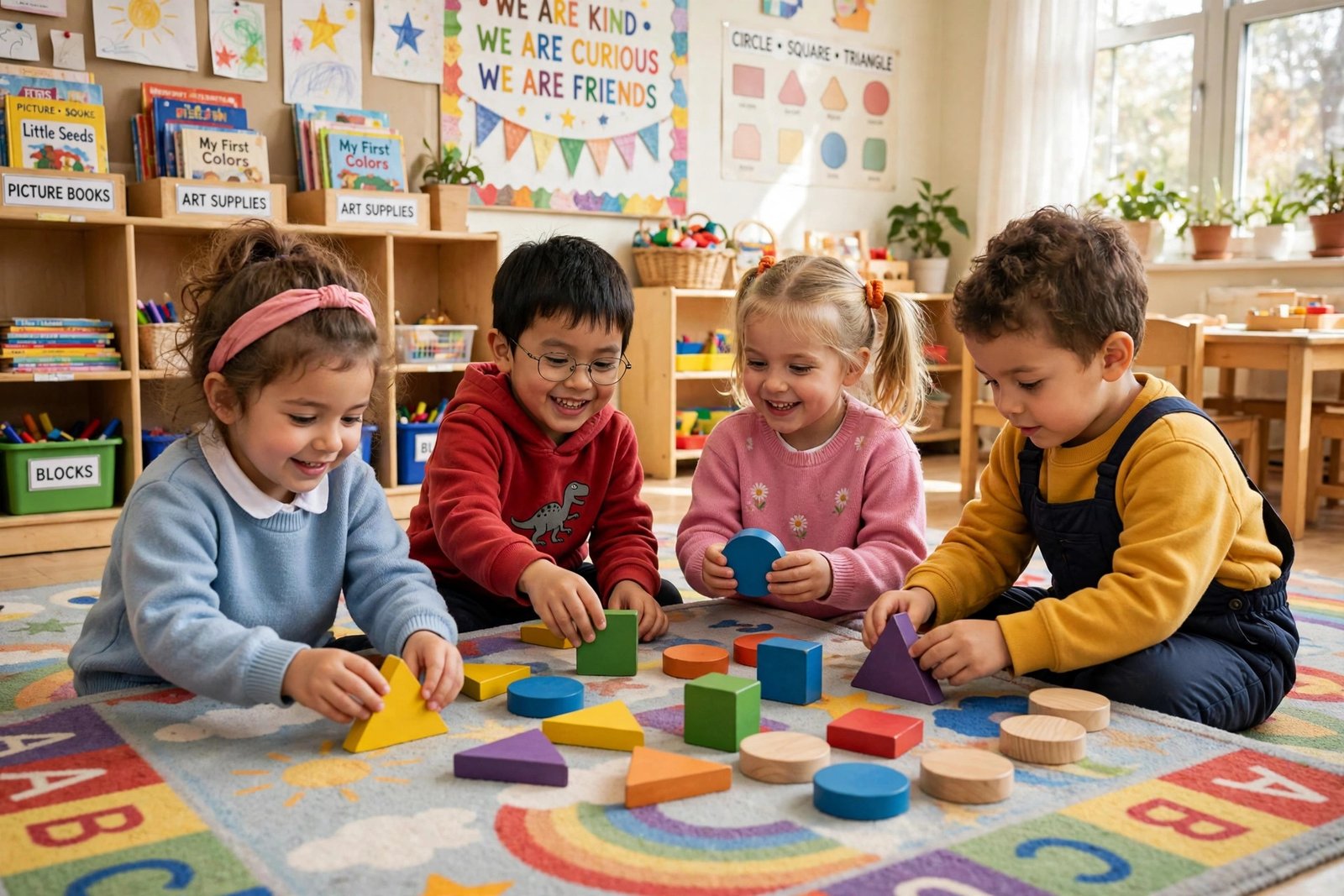

Have you ever watched a preschooler point at a slice of pizza and shout triangle with total pride? That small moment tells you a lot about how young children learn. They do not learn shapes from a worksheet alone. They learn them by touching, moving, building, and playing with the world around them.
Shape play builds early math skills in a way that feels like fun. When children sort circles from squares, they practice noticing what is the same and what is different. When they build a house from rectangles and triangles, they start to see how parts fit together to make a whole. Those skills help later with letters, numbers, puzzles, and reading maps and charts.
The best part is that shape play does not need fancy tools. You can use paper plates, blocks, tape on the floor, play dough, and things you already have in your room. The activities below work for circle time, centers, outdoor play, and rainy days. Pick one or two to start, then add more as your class gets excited.
Table of Contents
Hands-On Shape Play
These first five activities let children touch and build with shapes. They are great for the start of a shape unit, when children are still learning the names and what each shape looks and feels like. Keep the pace slow, name each shape out loud, and let children explore with their hands.
1. Shape Hunt Around the Room
Hide large paper shapes around the room before the children arrive. Give each child a small card with one shape on it. Ask them to walk around and find the matching shape on the wall, on a shelf, or under a chair. When they find it, they can tap the shape and say its name out loud. For a fun twist, hide a few shapes in tricky spots like behind a book bin or under a table. This simple hunt builds shape recognition and gets children moving and talking. It works well as a morning warm up.
2. Play Dough Shape Mats
Print or draw large shapes on card stock and cover them with clear contact paper. Set out play dough in bright colors and let children roll long snakes of dough to trace each outline. Show them how to pinch the corners for a square and curve the dough for a circle. Talk about straight sides and curved sides as they work. Add small buttons or beads to decorate the finished shapes. This quiet activity builds fine motor skills and helps children feel the difference between shapes with their fingers.
3. Shape Block Towers
Set out wooden blocks or foam blocks in a bin. Ask children to build a tower using only triangles on the bottom and squares on the top, then switch the rule. Let them test what stacks well and what tips over. Talk about flat sides and pointy corners as they build. Encourage them to describe their tower with shape words. You can add a simple challenge and ask who can build the tallest tower with ten blocks. This open play builds spatial thinking and gives children a reason to use shape names in real talk.
4. Felt Board Shape Stories
Cut large felt shapes in different colors and place them on a felt board. Start a short story and let children add shapes to build the scene. A yellow circle can become the sun, a brown rectangle can become a house, and a green triangle can become a tree. Ask children to choose the next shape and tell you where it should go. This activity builds shape names and story skills at the same time. Keep the board low so small hands can reach it, and change the story each week.
5. Shape Stamps With Sponges
Cut kitchen sponges into circles, squares, triangles, hearts, and stars. Pour washable paint into shallow trays and show children how to dip and press each stamp onto paper. Ask them to make a pattern with two shapes, like circle, square, circle, square. Talk about the print each stamp leaves and how it matches the sponge. Put newspaper under the paper to keep tables clean. This messy art play builds pattern skills and lets children see shapes in a fresh way.
Shape Art and Crafts
Art makes shapes stick in memory because children create something they can keep and show. These five crafts use simple paper, glue, and paint. They work well for art centers and for take home projects that families can talk about together.
6. Paper Plate Shape Faces
Give each child a paper plate and a pile of precut shapes in paper. Show them how to glue two small circles for eyes, a triangle for a nose, and a curved shape for a smile. Let them add yarn for hair and buttons for cheeks. Ask each child to name the shapes they used before they glue them down. Display the faces at child height so families can see them. This craft builds shape talk and scissor skills and it always makes children laugh when they see their silly faces.
7. Shape Collage Quilt
Cut a large sheet of paper into a grid of squares. Give each child one square and a basket of small paper shapes. Ask them to fill their square with a shape picture, then glue all the squares together to make a class quilt. Talk about how each small square is part of a bigger square. Hang the quilt where children can find their own piece. This project builds teamwork and helps children see shapes inside shapes. It also makes a bright display for your wall.
I tried this in my class last month, and here is what happened. I gave my group paper shapes and glue sticks and asked them to fill one square each for our quilt. One boy glued only triangles in a row and called it a mountain path. It was not what I planned, but the class loved it and other children started to copy the idea with their own twist. That small flop turned into our best quilt yet.
8. Shape Animal Puppets
Help children make simple animals from shapes. A cat can use a circle head, triangle ears, and a long rectangle tail. A fish can use an oval body and a triangle tail. Give them craft sticks to glue on the back so they can hold the puppets up. Let children act out a short puppet show and name the shapes in each animal. Keep the steps simple and let children choose colors. This craft builds creative thinking and gives children a fun reason to remember each shape name.
9. Tissue Paper Shape Windows
Cut a shape out of the middle of a dark paper sheet to make a frame. Give children small squares of colored tissue paper and clear contact paper to fill the opening. When they hold it up to the light, the colors glow through the shape. Talk about the shape of the window and the shapes of the tissue pieces. Hang the finished windows near a sunny spot. This craft is calm and lovely, and it helps children notice shape outlines and light and color in one simple project.
10. Shape Crown Parade
Cut strips of card stock to fit around each child head and staple the ends to make a crown band. Give children paper shapes to glue around the band, like stars, hearts, and diamonds. Let them wear the crowns and march around the room while you call out a shape name. When you call triangle, children with a triangle on their crown can jump. This joyful parade builds listening skills and shape names, and it works well at the end of a shape week.
Shape Play at a Glance
Use this quick guide to pick the right activity for your time and your group. Some activities need almost no prep, while others work best when you set out materials ahead of time. Mix fast games with longer crafts across the week.
| Activity | Setup Time | Materials | Best For |
| Shape Hunt Around the Room | 5 minutes | Paper shapes, shape cards | Whole group movement |
| Play Dough Shape Mats | 10 minutes | Play dough, shape mats | Quiet fine motor work |
| Shape Block Towers | 2 minutes | Blocks in a bin | Free play and building |
| Shape Stamps With Sponges | 10 minutes | Sponges, paint, paper | Messy art and patterns |
| Tissue Paper Shape Windows | 15 minutes | Paper, tissue, contact paper | Calm art center |
| Shape Crown Parade | 10 minutes | Card strips, paper shapes | End of week celebration |
| Shape Hopscotch | 5 minutes | Chalk or tape | Outdoor energy and gross motor |
| Shape Sorting Trays | 5 minutes | Trays, mixed shapes | Centers and early finishers |
Movement and Outdoor Shape Games
Preschoolers learn best when their whole body is part of the lesson. These five games get children running, jumping, and reaching while they practice shapes. They are perfect for outdoor time, gym time, or a large classroom rug.
11. Shape Hopscotch
Draw large shapes on the ground with chalk or tape them on the floor with painter tape. Call out a shape and ask children to hop to it. Start with circles and squares, then add triangles and rectangles as children learn them. Let children take turns calling the next shape for the group. Keep the path short so little legs do not get tired. This game builds gross motor skills and fast shape recall, and children ask to play it again and again.
12. Shape Bean Bag Toss
Place four large shape mats on the floor a few feet away. Give each child a bean bag and call out a shape to aim for. When the bag lands on the right shape, the child can cheer and say the shape name. Move the mats closer for younger children and farther for older ones. Use soft bean bags so no one gets hurt. This game builds hand eye coordination and gives children a clear target to focus on while they practice shape names.
13. Shape Freeze Dance
Play music and let children dance around the room. When the music stops, hold up a large shape card and ask children to make that shape with their bodies. A circle means arms curved overhead, a triangle means hands together on top, and a square means arms out wide. Keep the rounds short and silly. This game builds body awareness and shape memory in a joyful way. It also works well as a quick break between quiet activities.
14. Shape Relay Race
Set up two teams and place a pile of foam shapes at the far end of the room or yard. Call out a shape and ask the first child in each team to run, find that shape, and bring it back. The next child goes when the first child returns. Keep the race friendly and cheer every runner. Use large shapes so they are easy to spot from a distance. This team game builds team spirit and quick thinking, and it helps children link shape names to real objects under a bit of happy pressure.
15. Shape Scavenger Hunt Outside
Take children outside with a simple picture list of shapes to find. A wheel can be a circle, a window can be a rectangle, and a roof can be a triangle. Walk slowly and let children point out shapes they see on buildings, signs, and play equipment. Give each child a small bag to collect safe nature shapes like round stones and oval leaves. Talk about what you found when you get back inside. This hunt builds observation skills and shows children that shapes live in the real world.
Quiet Table Games and Sorting Fun
Every classroom needs calm activities for centers and for children who need a slower pace. These five table games build sorting, matching, and early math skills without noise or mess. Set them out in baskets so children can choose them on their own.
16. Shape Sorting Trays
Fill a tray with mixed plastic shapes in different colors and sizes. Give children small cups or bowls and ask them to sort the shapes by type. Start with two shapes only, then add a third when children feel sure. Ask them to count how many circles they found and how many squares. Use clear trays so children can see their piles grow. This simple sort builds classification skills and careful looking, and it is easy to reset for the next child.
17. Shape Matching Cards
Make pairs of cards with the same shape in the same color and lay them face down. Let children turn over two cards at a time and keep the pair when they match. Start with six cards for younger children and add more as they gain skill. Talk about why two cards match and why two cards do not. Keep the game short so children stay focused. This classic game builds memory skills and shape names, and it works well in pairs or small groups.
18. Shape Bingo
Make simple bingo cards with nine shapes in a grid. Call out a shape name and show the shape card so children can find it on their board. Give them small counters or pom poms to cover each match. When a child covers a full row, they can shout bingo and read the shapes in that row. Keep the pace slow and repeat each shape name twice. This game builds listening skills and shape recall, and children love the thrill of filling a row.
19. Shape Puzzle Boards
Use simple wooden puzzles or print shape outlines on card stock and cut the shapes out. Ask children to fit each piece back into its outline. Start with three shapes, then add more as children gain confidence. Talk about corners and curves as they try each piece. If a piece does not fit, ask what is different about it. This calm puzzle work builds problem solving and fine motor control, and it gives children a quiet win when the last piece clicks into place.
20. Shape Counting Books
Fold paper into a small book and help each child make one page for each shape. On the circle page they can draw or glue three circles, on the square page they can draw two squares, and so on. Write the shape name and the number on each page in clear print. Let children read their books to a friend when they finish. Keep the numbers small so the task stays joyful. This book project links shapes and counting in one sweet keepsake that families can read at home.
Frequently Asked Questions
How many shapes should preschoolers learn first?
Start with four basic shapes. Circle, square, triangle, and rectangle give children a strong base. Add oval, star, heart, and diamond once they know the first four well. Keep the pace slow and repeat the names often in play. Children learn faster when they hear and use a shape name many times in real games.
What age is best to start shape activities?
Most children are ready for simple shape play around age three. At that age, keep activities short and hands on, with big shapes they can touch and move. Older preschoolers can handle sorting, matching, and simple patterns. Watch your group and follow their lead. If an activity feels too hard, make the shapes bigger and the steps shorter.
How do I help a child who mixes up shapes?
Stay calm and keep it playful. Point out one clear difference, like a circle has no corners and a square has four corners. Let the child trace the shape with a finger and count the corners with you. Play a quick sorting game with just those two shapes. With short daily practice, most children sort it out in a few weeks.
Do I need to buy special materials for shape play?
No, you do not need special tools to teach shapes well. Paper plates, cardboard, tape, play dough, blocks, and kitchen sponges work just fine. Save old boxes and lids for building and sorting. If you want to add a few items, foam shapes and shape puzzles are low cost and last a long time. Start with what you have and add slowly.
How long should a shape activity last?
Most preschool shape activities work best in ten to twenty minutes. Short games keep energy high and help children stay focused. Longer crafts can run for thirty minutes if children are engaged and have a clear end point. Watch for signs of restlessness and wrap up while the fun is still fresh. You can always return to the same activity the next day.
How can I use shapes during circle time?
Circle time is a great place to review shapes in a group. Hold up a large shape card and ask children to find that shape in the room. Sing a short shape song and let children clap when they hear their shape name. Use a felt board to build a quick scene with shapes. Keep it to five minutes so young children stay with you.
Final Thoughts
Shape play is one of the easiest ways to bring early math to life in a preschool room. When children hunt, build, sort, dance, and create with shapes, they learn the names and the ideas behind them without pressure. They also build language, motor skills, and confidence with each small success.
You do not need to do all twenty activities in one week. Pick the ones that fit your space, your time, and your children. Repeat the favorites, change the materials, and let children lead the play when they can. The joy you see when a child spots a triangle in a roof or a circle in a wheel is the real sign that the learning has stuck. Keep the shapes in reach, keep the games playful, and enjoy watching your class see the world in new shapes each day.
