
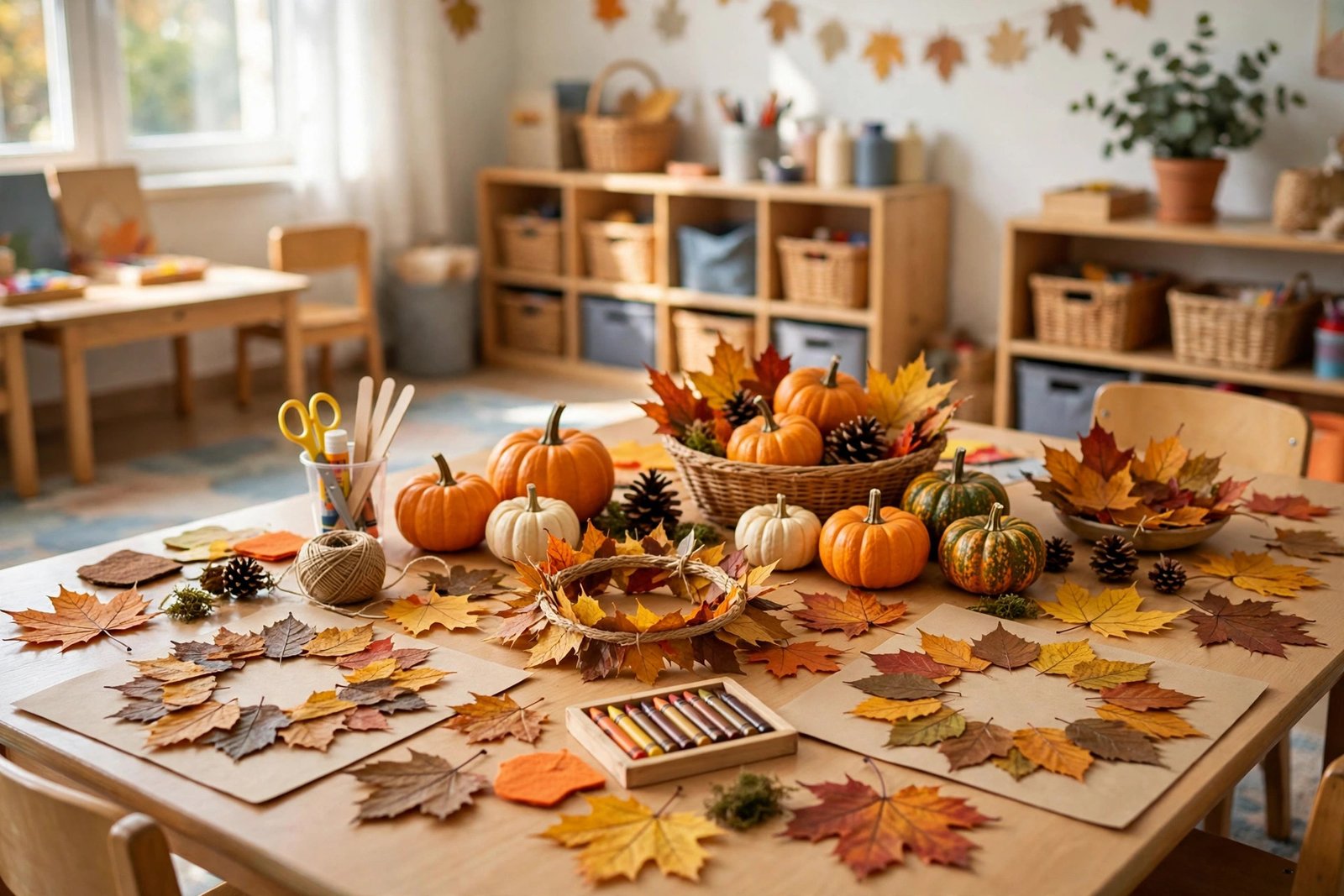

The morning air felt cool when I opened the classroom door, and a pile of red and gold leaves waited on the welcome mat where the wind had pushed them in. Maya picked one up before she even took off her coat. She held it up and said it looked like a tiny hand waving hello. Within a minute, three more children were at the door, each one holding a leaf and telling me where they had found it.
By the time the bell rang, our reading corner had turned into a leaf museum. The leaves were all different shapes and shades. The children were not worried about names or labels. They were busy sorting, touching, and talking, and that is exactly what fall does so well in a kindergarten room. It gives small hands something real to hold and small minds something new to notice.
That is why fall crafts work so well with five and six year olds. The season hands you the materials for free, and the projects stay simple enough for short attention spans. A leaf becomes a lion mane. A paper plate becomes a pumpkin face. A pinecone becomes an owl that watches over the bookshelf. You need paper, glue, paint, and a plan that fits into one lesson.
The twenty crafts below are grouped by theme so you can pick what fits your week. Start with leaves, move on to pumpkins, then try harvest and nature ideas, and finish with fall animals. Each craft uses cheap classroom supplies, takes a short block of time, and ends with something a child can hold up with pride. Keep the steps short, show one example, and let each child make the craft their own way.
Table of Contents
Leaf Crafts for Little Hands
Leaves are the easiest way to start fall in a kindergarten room because every child can find one on the way to school. The crafts below use that natural variety. Set out leaves, paper, glue, and crayons, and let the class explore first.
1. Leaf Lion With a Crunchy Mane
Give each child a paper plate and help them paint a simple lion face in the middle with yellow paint and a brown nose. While the paint dries, let them pick five or six dry leaves in warm colors and glue them around the edge of the plate to make the mane. Add two round eyes and a smile with a black crayon. A leaf lion turns a nature walk into art because the leaves do most of the work and every mane looks different. Hang the lions near the door for families to see.
2. Leaf Rubbing Art Book
Place a leaf under a sheet of plain white paper with the bumpy side up, then show kids how to rub a crayon sideways across the paper to reveal the shape. Let each child make three rubbings with different leaves and different crayon colors, then staple the pages together into a small book. Kids can write one word under each rubbing, such as red or big or pointy. Leaf rubbing art builds careful looking because kids have to notice veins and edges they would normally walk past. Keep the books in the reading corner.
3. Falling Leaves Mobile
Cut a paper plate in half and punch three holes along the curved edge, then tie a short piece of yarn through each hole. Kids glue a dry leaf to the end of each yarn piece and add a paper acorn or a small painted circle near the top. Hang the mobile from a hook or a classroom clothesline and let it turn slowly in the air. A falling leaves mobile brings movement into fall art and gives kids a reason to watch how air moves light things. Let each child choose which leaf goes on the longest string.
4. Leaf Person Puppets
Help each child glue a large dry leaf onto a craft stick to make a puppet body, then add two paper eyes and a smile near the top of the leaf. Kids can glue on a small paper hat, a yarn scarf, or arms cut from brown paper strips. Once the puppets are dry, let pairs of children make their leaf people talk to each other for a minute. Leaf person puppets build talking and listening skills because kids have to invent words for a character they just made. Store the puppets in a cup for free play.
5. Rainbow Leaf Collage
Tear red, orange, yellow, and brown tissue paper into small pieces and glue them onto a large sheet of white paper in loose bands of color. Then kids press real dry leaves on top of the tissue and glue them down flat, adding a few crayon stems and veins around the edges. Work on one big class collage together, or give each child a smaller sheet for their own version. A rainbow leaf collage teaches color mixing while the class builds something bright enough to fill a whole bulletin board. Add a title card with the season name.
Pumpkin Crafts That Make Kids Smile
Pumpkins are a favorite with kindergarten kids because the shape is simple, the face is fun to draw, and the color is hard to miss. These five crafts use paper plates, paper bags, and paint, so you can set them up with supplies you already have in the cupboard. Keep the faces friendly and let kids choose their own eyes and smiles.
6. Paper Plate Pumpkin Face
Give each child a paper plate and orange paint, and let them paint the whole plate to make a pumpkin. While the paint dries, kids cut two triangle eyes and a wide smile from black paper, then glue them onto the plate. Add a green paper stem at the top and a curly brown vine made from a twisted strip of paper. A paper plate pumpkin face works for every child because the steps are simple and the result always looks cheerful on the wall. Let kids name their pumpkin and write the name on the back.
7. Pumpkin Patch Fingerprint Art
Paint each child's thumb with orange paint and help them press it onto paper in a row to make a line of tiny pumpkins. Once the prints are dry, kids draw a green stem and a curly vine on each pumpkin with a crayon, then add two tiny eyes and a smile. Add a strip of brown paper at the bottom for soil and a blue sky at the top. Pumpkin patch fingerprint art makes a keepsake that parents love, and younger kids enjoy the painting step on its own. Let each child wash hands after printing.
8. Paper Bag Pumpkin Puppet
Give each child a small brown paper bag and help them paint the bottom half orange to make a pumpkin body. Once the paint is dry, kids glue on paper eyes, a nose, and a smile, then add a green paper leaf near the top fold. Slip a hand inside the bag and the pumpkin can nod, wiggle, and talk. A paper bag pumpkin puppet turns art into play because the finished craft becomes a toy right away. Let pairs of children put on a short puppet show for the class at the end of the lesson.
9. Pumpkin Seed Counting Card
After you open a real pumpkin for the class to see, give each child a small cup of clean dry pumpkin seeds and a piece of card with ten circles drawn on it. Kids glue one seed into each circle and count out loud as they go, then draw a pumpkin face on the card once all ten seeds are in place. Talk about how seeds grow into new pumpkins in spring. A pumpkin seed counting card builds number skills while kids handle real seeds from a real pumpkin. Keep extra seeds for a second card.
10. Striped Paper Pumpkin
Cut orange paper into long strips and show kids how to glue the ends of each strip into a loop. Then help them glue five or six loops together at the top and bottom to make a round pumpkin shape that stands up on the table. Add a green paper stem and a brown paper vine, then let kids draw a face on the front loop with a black crayon. A striped paper pumpkin teaches shape and building because kids see flat strips turn into a round shape in their hands. Set the pumpkins on the windowsill.
| Craft | Time Needed | Supplies | Best For |
|---|---|---|---|
| Leaf Lion With a Crunchy Mane | 20 to 30 minutes | Paper plates, paint, dry leaves, glue | Art time and bulletin boards |
| Leaf Rubbing Art Book | 15 to 20 minutes | Leaves, white paper, crayons, stapler | Quiet art and nature study |
| Paper Plate Pumpkin Face | 20 minutes | Paper plates, orange paint, black paper | Whole class art and fall displays |
| Pumpkin Seed Counting Card | 15 minutes | Pumpkin seeds, card, glue, crayons | Math centers and counting practice |
| Pinecone Owl Friend | 25 minutes | Pinecones, felt, googly eyes, glue | Craft shelf and story time |
| Acorn Counting Cups | 15 minutes | Paper cups, acorns, number cards | Math games and small groups |
| Squirrel Tail Paper Craft | 20 minutes | Brown paper, orange paper, glue, crayons | Art time and animal study |
Harvest and Nature Crafts
Harvest time gives kindergarten kids a chance to touch real things from nature, such as pinecones, acorns, apples, and corn. These crafts use those materials in simple ways, so kids learn where food comes from while they make something with their hands. Keep the materials in labeled baskets on a low shelf.
11. Pinecone Owl Friend
Give each child a clean dry pinecone and help them glue two large paper eyes near the top, with a small orange triangle beak below. Add two felt wings on the sides and two small felt feet at the bottom, then let the owl sit on a paper branch drawn on card. Kids can give the owl a name and tell the class one thing their owl likes to watch at night. A pinecone owl friend builds fine motor skills because kids have to glue small pieces onto a bumpy surface with care. Keep the owls on the science shelf.
12. Apple Print Harvest Picture
Cut an apple in half across the middle and show the class the star shape hidden inside, then dip the cut side in red or green paint. Kids press the apple onto paper to make round prints, then draw stems, leaves, and a brown basket around the prints with crayons. Let each child make three prints and label them with one word about apples. Apple print art shows kids a hidden pattern in a fruit they eat every day, which makes the lesson feel like a small discovery. Let the prints dry flat.
13. Corn Cob Painting
Give each child a small corn cob with the husk pulled back, and show them how to roll it in yellow and orange paint on a tray. Then kids roll the painted cob across a sheet of paper to make bumpy stripes and patterns, lifting it up to see the marks it leaves behind. Add a few green paper leaves at the edge of the paper once the paint is dry. Corn cob painting adds texture to art time because the bumpy cob makes marks a brush cannot make. Let kids compare patterns with a friend.
14. Acorn Counting Cups
Set out ten small paper cups in a row and give each child a pile of acorns and a set of number cards from one to ten. Kids count out the right number of acorns into each cup, then flip the number card on top to check their work. Once all ten cups are filled, let kids tip one cup out and count the acorns back into the basket. Acorn counting cups build one to one counting in a hands on way that feels like a game instead of a worksheet. Store the set in a labeled box.
15. Harvest Wreath With Paper Leaves
Cut the middle out of a paper plate to make a ring, then let kids glue paper leaves, small paper apples, and orange paper pumpkins around the ring until it looks full. Add a loop of yarn at the top so the wreath can hang on the classroom door. Kids can pick their favorite leaf color and place it where they want it to show. A harvest wreath gives the class a shared display that welcomes families into the room and shows off every child's work at once. Let each child point out their own leaf.
Fall Animals and Friends
Fall animals give kids a reason to talk about how animals get ready for cold weather, and the crafts below keep that idea simple and kind. Squirrels gather nuts and bears settle down for a long rest. Each craft ends with a friendly animal a child can keep or take home.
16. Squirrel Tail Paper Craft
Give each child a sheet of brown paper and help them draw a large squirrel body with a big curvy tail, then cut it out with safe scissors. Kids glue orange paper strips onto the tail to make it look fluffy, then add a round eye, a small nose, and a paper acorn held in the front paws. Talk about how squirrels hide nuts in fall to find later. A squirrel tail paper craft builds cutting and gluing skills because the tail shape needs slow careful work. Let kids share where a squirrel might hide a nut.
17. Hedgehog With Spiky Leaves
Give each child a paper plate and help them paint the middle brown for a hedgehog face, then glue dry leaves around the edge to make spiky quills. Add two small eyes and a round black nose, then draw a smile under the nose with a crayon. Kids can glue a tiny paper apple on the hedgehog back as a fun touch. A hedgehog with spiky leaves turns a walk outside into art and gives kids a safe way to learn about an animal that curls up when it feels shy. Keep the hedgehogs on a low shelf.
18. Friendly Fox Mask
Cut a simple fox mask shape from orange card and help each child cut out two eye holes with care. Kids glue on white paper cheeks, a black paper nose, and two triangle ears with pink paper inside, then tape a craft stick handle to one side. Let the class wear their masks for a short circle time game where foxes take turns telling the group one fall sound they heard. A friendly fox mask builds talking confidence because the mask lets shy kids speak in a playful voice. Store the masks for story time.
19. Bear Cave Paper Diorama
Give each child a shoebox with the lid off, and help them paint the inside brown to make a cozy cave. Kids glue cotton balls along the floor for soft bedding, add paper leaves at the cave mouth, and place a small paper bear curled up inside. Talk about how bears rest through winter after a busy fall of eating and getting ready. A bear cave paper diorama makes a big idea small enough to hold because kids can see the whole cave and the sleeping bear in one box. Let kids show their diorama to a partner.
I tried this in my class last month, and here is what happened. I set up the bear cave diorama on a Thursday afternoon when the class was tired, and the first box fell apart because I had used too much paint on the inside and the paper leaves would not stick. I let the box dry overnight, fixed it with a fresh layer of glue the next morning, and let the child finish it then. The bear came out a little lopsided, and the cotton balls looked more like snow than bedding, but the child carried it home like a treasure. That small fix taught me to keep the paint thin and the glue ready.
20. Owl Paper Bag Puppet
Give each child a small brown paper bag and help them paint the bottom flap to make an owl face, with two large paper eyes and a small beak. Add two paper wings on the sides and a few paper feathers cut from brown and orange paper. Slip a hand inside the bag and the owl can blink, nod, and hoot softly for the class. An owl paper bag puppet turns art into a story tool because the finished puppet can join in during read aloud time. Let pairs make their owls talk before they take them home.
Frequently Asked Questions
What supplies do most of these fall crafts need?
Most of these crafts use things a kindergarten classroom already has, such as paper, paint, glue, crayons, paper plates, and craft sticks. A few need dry leaves, pinecones, acorns, or a real pumpkin, and those are cheap to gather on a walk or pick up at a grocery store. Start with the crafts that use what you have on hand, and add one or two new supplies each week.
How much time should fall crafts take each day?
Fifteen to twenty minutes a day is enough to make a real difference, and it fits easily between lessons or right after lunch. A longer session of twenty to thirty minutes once or twice a week works well for bigger projects like the harvest wreath or the bear cave diorama. The key is a steady pace, so short and often beats long and rare.
What if some kids are not ready to use scissors yet?
Give those kids pre cut shapes and let them focus on gluing, painting, and placing pieces where they want them. Let a helper or a teacher sit beside them for the cutting step, and praise the careful work they do with glue and paint. Cutting skills grow with practice, and every child can finish a craft they feel proud of without cutting every piece alone.
Can fall crafts fit into math and reading lessons?
Yes, fall crafts fit naturally into both subjects. Math lessons can use the pumpkin seed counting card and the acorn counting cups to practice counting to ten and sorting by size. Reading and writing lessons can use the leaf rubbing art book and the leaf person puppets to practice new words, simple labels, and short stories.
How can teachers keep fall art projects from making a huge mess?
Cover tables with old newspaper or plastic tablecloths before the paint comes out, and set out one small cup of water per table for brush rinsing. Give each step its own short time limit so paint and glue do not sit out all lesson, and keep a stack of paper towels within reach. End art time five minutes early so kids can wash hands and stack drying work neatly.
What is the best way to display fall crafts in the classroom?
Hang flat crafts at child eye level on a bulletin board or a wall, and set three dimensional crafts on a low shelf or a windowsill where kids can see them up close. Add a simple title card with the name of the project, and change the display every week or two so new work gets its turn.
Final Thoughts
Fall gives a kindergarten classroom a season that is easy to touch, easy to see, and easy to love. Leaves crunch under small shoes, pumpkins sit heavy on the table, and animals get ready for cold days in ways kids can understand and act out. Start with one craft from this list, the one that feels easiest to you, and try it this week. Watch what works and adjust the next one based on what you saw. Over time those small moments add up into a class that explores together, asks better questions, and treats making things with their hands as a normal part of the school day. It starts with a single leaf on a cool fall morning.
