

Table of Contents
Here is what you need for a calm classroom moment that actually works with young kids. A timer the class can see, a small quiet corner or a cleared space at the front of the room, a few soft props like a stuffed animal or a smooth stone, and about five minutes you protect from rushing. That is it. You do not need special training, fancy tools, or a perfectly silent room. You just need a short routine kids can learn once and repeat on their own, and a calm voice to guide the first few rounds.
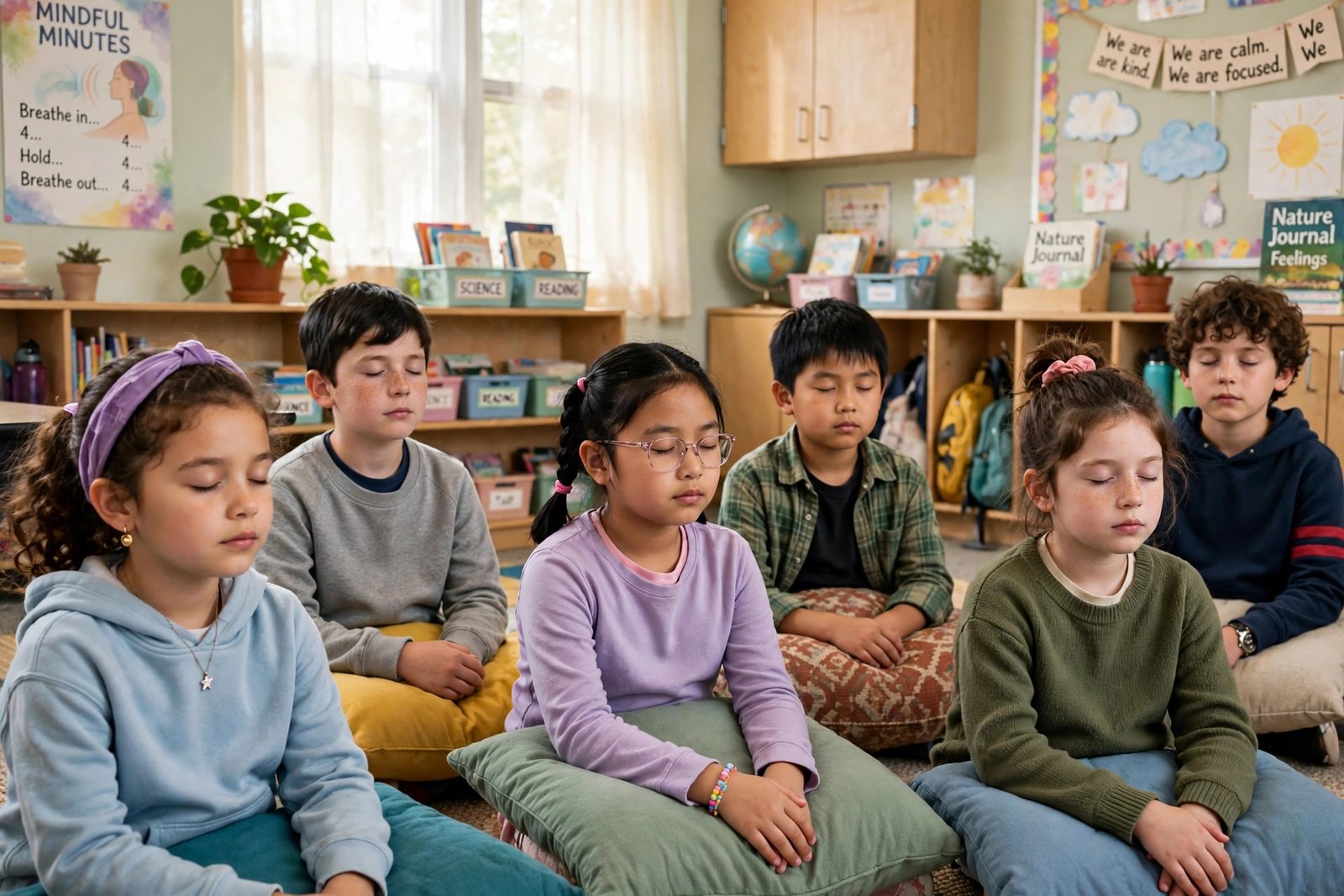
Mindfulness in an elementary classroom does not have to look serious or still. For young students, it mostly means pausing, noticing, and breathing on purpose for a minute or two. It can fit right after morning announcements, before a test, after recess when energy is high, or at the end of a long day. The activities below are short, simple, and easy to teach. Pick one, practice it for a week, and add another only when the first one feels easy. Kids do best when the routine stays the same, the instructions stay short, and the teacher joins in too.
Start the Day Calm
Mornings set the tone for the whole day, and a calm start helps kids shift from home mode into learning mode. These first three activities work best when the class is still settling in, bags are away, and everyone is seated. Keep your voice slow and steady, keep the lights as they are, and do not worry if a few kids giggle the first time. Giggles fade fast once the routine feels normal. The goal is not perfect quiet. The goal is a shared pause that tells the class, we are here now, and we are ready to learn together. If mornings feel rushed, keep the first activity to two minutes and let kids join as they settle, because a short calm start still beats a long one that never happens. Use the quick guide below to pick the right fit for each part of the day.
| Activity | Best Time of Day | Length | What You Need |
| Morning Breathing Circle | Morning arrival | 3 minutes | Nothing |
| Balloon Breathing | Before a lesson | 3 minutes | Nothing |
| Listening Bell Game | After recess | 4 minutes | A small bell or chime |
| Sound Hunt | Midday reset | 5 minutes | Nothing |
| Slow Motion Walking | Afternoon energy dip | 5 minutes | Open floor space |
| Drawing Your Breath | End of day | 5 minutes | Paper and crayons |
1. Morning Breathing Circle
Ask students to sit in a circle or stay at their desks with both feet flat on the floor. Say, "We are going to take three slow breaths together." Breathe in through your nose for a count of three, then breathe out through your mouth for a count of four. Do it with them, with your shoulders relaxed and your hands in your lap. Repeat three times, then ask the class to notice how their bodies feel. Keep the whole activity under three minutes, and use the same words every day so kids can lead it soon.
2. Feelings Check-In With Fingers
Hold up your hand and show students how to rate their morning feeling from one to five fingers, where one means tired or wiggly and five means calm and ready. Say, "Show me your number, no talking, just fingers." Give kids five seconds to choose, then nod and smile at a few hands around the room. You can follow up quietly with any student who shows one finger. This quick check builds self-awareness without a long discussion, and it helps you spot who might need extra patience that morning.
3. Quiet Hands, Quiet Feet Minute
Set a visible timer for one minute and say, "For one minute, we keep our hands still and our feet still, and we just breathe." Kids may rest their hands on their desks or in their laps. If a child fidgets, do not correct them out loud. Just keep breathing slowly yourself and let the timer do the work. When the minute ends, ask, "What did you notice?" Accept short answers like "my breathing slowed down" or "it was hard." This tiny pause teaches body control in a kind, low pressure way.
Breathing and Body Activities
Breathing activities are the backbone of a calm classroom because they work anywhere and need no supplies. The trick is to make breathing concrete for young kids. Counting, hand tracing, and pretend play all help, because an abstract instruction like "just relax" means very little to a seven year old. Give them something to watch, something to count, or something to pretend, and their breathing slows down on its own. Practice these when the class feels wound up, before a tricky lesson, or anytime you notice shoulders creeping up toward ears. If a breathing activity flops the first time, do not drop it. Try it again the next day with slower counting and a smaller group of steps, because familiarity is what turns a new trick into a habit kids actually use.
I tried this in my class last month on a rainy afternoon when everyone was restless after indoor recess. I kept it to just the shoulder rolls and the arm drop, nothing fancy, and two kids asked if we could do it again after lunch. It did not fix the whole afternoon, but the next lesson started quieter, and that small shift was enough for me to keep it in our routine.
4. Balloon Breathing
Tell students to pretend they have a balloon in their belly. Say, "Breathe in slowly and fill your balloon, now breathe out slowly and let the air out." Put your hands on your own belly to show the rise and fall. Do four rounds together, counting in for three and out for four. If a child breathes too fast, say, "Try filling your balloon a little slower this time." This activity builds calm breathing skills kids can use before a spelling test or a class presentation.
5. Shoulder Roll and Stretch Break
Stand up together and roll your shoulders back four times, then forward four times. Reach both arms up high, then let them drop down loose like cooked noodles. Shake out your hands for five seconds, then sit back down. Keep the pace slow and name each move before you do it, so kids can follow without watching you the whole time. This two minute reset releases physical tension after long sitting, and it works well between subjects when focus starts to slip.
6. Five Senses Walk Around the Room
Walk slowly around the room together and pause at four spots. At each spot, ask students to name one thing they can see, hear, or feel, without touching anything. Say, "What do you hear right now? What do you see near the window?" Keep voices low and steps slow, like a quiet museum walk. This five minute activity trains gentle attention and gives wiggly kids a reason to move without turning the room into a race.
7. Starfish Breathing
Ask students to hold up one hand like a starfish, fingers spread wide. With the pointer finger of the other hand, they trace slowly up one finger while breathing in, then down the other side while breathing out. Go finger by finger until they reach the pinky. Model it on your own hand first so kids can copy the pace. This activity pairs slow breathing with a visual path, which helps students who struggle to count breaths in their heads.
Focus and Listening Activities
Listening games build focus without feeling like work, and they are perfect for the stretch after lunch or recess when attention is scattered. The secret is to keep the rules simple and the rounds short. One clear instruction, one short round, and a quick share at the end beats a long explanation every time. These activities also help kids practice waiting, taking turns, and listening to each other, which are classroom skills that carry into every subject. If the room is still noisy, do not raise your voice to compete with it. Lower your voice instead, pause, and let the quiet pull their attention back, because kids tend to lean in when the teacher gets softer, not louder.
8. Listening Bell Game
Ring a small bell or chime once and say, "Close your eyes if you want to, and raise your hand when you cannot hear the sound anymore." Wait in silence while the sound fades, which usually takes twenty to thirty seconds. When most hands are up, ring it again and repeat. After two rounds, ask what students noticed about the sound getting softer. This quiet game builds focused listening and gives the whole class a shared moment of stillness after a noisy transition.
9. Sound Hunt
Ask students to sit still for one minute and count silently how many different sounds they can hear. Say, "You might hear the clock, footsteps in the hall, or a bird outside." After the minute, let a few students share their lists, and praise careful listeners rather than the biggest number. You can repeat this outdoors or near an open window for a fresh set of sounds. This activity strengthens everyday awareness and shows kids that paying attention can feel like a game, not a chore.
10. Mindful Snack Bite
At snack time, give students one small bite of food, like a cracker or a slice of apple. Say, "First look at it, then smell it, then take one slow bite and notice the taste." Ask them to chew slowly and put the food down between bites. Keep it light and fun, and never force a child to eat something they do not want. This three minute activity teaches slow noticing through taste and texture, and it turns an ordinary snack into a calm pause in the day.
11. Gratitude Stone Pass
Place a smooth stone or a soft ball in a basket and pass it around the circle. Whoever holds it says one small good thing from the day, like "I liked story time" or "My friend helped me." Keep answers short and never force a child to speak. If a student passes, just smile and move on. This five minute circle builds kind attention toward classmates and ends on a warm note, which makes it a lovely fit for Friday afternoons or the last circle of the day.
Movement and Quiet Play Activities
Some classes calm down faster through gentle movement than through sitting still, and that is completely normal. Slow, guided movement gives busy bodies something to do while the mind settles. Keep these activities slow on purpose, and narrate the pace as you go, with words like "slowly" and "gently" doing most of the work. If the energy rises instead of settling, shorten the activity and finish with one slow breath together. The class will learn the rhythm with practice. A good rule is to end every movement activity in the same way, seated, hands still, one breath in and out, so kids learn that movement time ends with calm, not with a scramble back to desks.
12. Slow Motion Walking
Clear a small path around the desks and ask students to walk as slowly as they can, like they are moving through thick honey. Say, "Lift your foot slowly, place it down slowly, and feel the floor." Walk with them for two minutes, then stop and take one slow breath together. This activity channels restless energy into controlled movement, and it works well on rainy days when recess stays indoors and legs need to move.
13. Yoga Pose Cards
Make or print simple cards showing five easy poses with friendly names, like Tree, Cat, Mountain, Butterfly, and Child's Rest. Hold up one card at a time, name the pose, and hold it together for about thirty seconds while breathing slowly. Let students choose the last pose of the set. Keep the mood relaxed, not competitive, and praise steady balance rather than perfect form. This five minute set builds body awareness and gives kids a movement routine they can request by name.
14. Drawing Your Breath
Give each student a piece of paper and a crayon. Say, "Breathe in and draw a line up, breathe out and draw a line down, and keep going until your paper has a wavy path." Let them choose their own colors and keep the pace slow, with no right or wrong picture at the end. After three minutes, invite students to show a neighbor if they want to. This activity turns breathing practice into art, which suits kids who focus better with their hands busy.
15. End of Day Body Scan
Ask students to sit comfortably, close their eyes if they want to, and listen as you name body parts from toes to head. Say, "Notice your toes, now your legs, now your shoulders, now your face. If a part feels tight, take one slow breath and let it soften." Spend about ten seconds on each area and keep your voice soft and slow. This four minute close helps kids leave school feeling settled and calm, and it gives the day a gentle ending instead of a rushed one.
Frequently Asked Questions
How long should a mindfulness activity last for elementary students?
Keep most activities between two and five minutes, and stop while the class still enjoys it. Short, regular practice beats one long session that loses the room. If an activity works well, repeat it daily for a week before trying a new one, so kids learn the routine by heart.
What if my students laugh or cannot sit still?
That is normal, especially in the first week. Laughing usually means kids are a little unsure, not that they dislike the activity. Keep your voice calm, join in yourself, and shorten the activity if needed. Most classes settle down once the routine feels familiar and no one is singled out for wiggling.
Do I need special training or supplies to start?
No, you do not need training or supplies to begin. The activities in this list use everyday items like a bell, a stone, or crayons, and many need nothing at all. Start with one breathing activity, practice it yourself first, and add more only when you feel comfortable leading them.
When is the best time of day for mindfulness in the classroom?
The best time is whenever your class needs a reset, and many teachers pick morning arrival or right after recess. Try one slot for a week and watch how the class responds. If mornings feel rushed, move the activity to after lunch, and keep the time consistent so kids know what to expect.
Can mindfulness activities help before a test or a presentation?
A short breathing activity can help students settle their nerves before a test, a reading aloud turn, or a class talk. Teach the activity on a calm day first, so kids already know it when the pressure rises. Keep it brief, about two minutes, and frame it as a tool they can choose, not a rule they must follow.
What should I do if a student does not want to join in?
Let that student sit quietly and watch, without pressure or a public comment. Many reluctant kids join in after a few days once they see classmates enjoying the routine. Offer a small role instead, like holding the timer or ringing the bell, which keeps them part of the group in a comfortable way.
Final Thoughts
Mindfulness with elementary students works best when it stays small, steady, and kind. You do not need a perfect routine or a silent room. You need one activity kids know well, a few minutes you protect each day, and a teacher who breathes along with them. Start with the activity that feels easiest to you, practice it for a week, and let the class grow into it at their own pace. Over time, those short pauses add up to calmer transitions, better focus, and a classroom that knows how to slow down together. Keep a small list on your desk of the three activities your class likes best, and return to those on hard days instead of chasing something new. Consistency is the real trick, not variety. Pick one activity for tomorrow morning, try it with a smile, and see how your class responds.
