
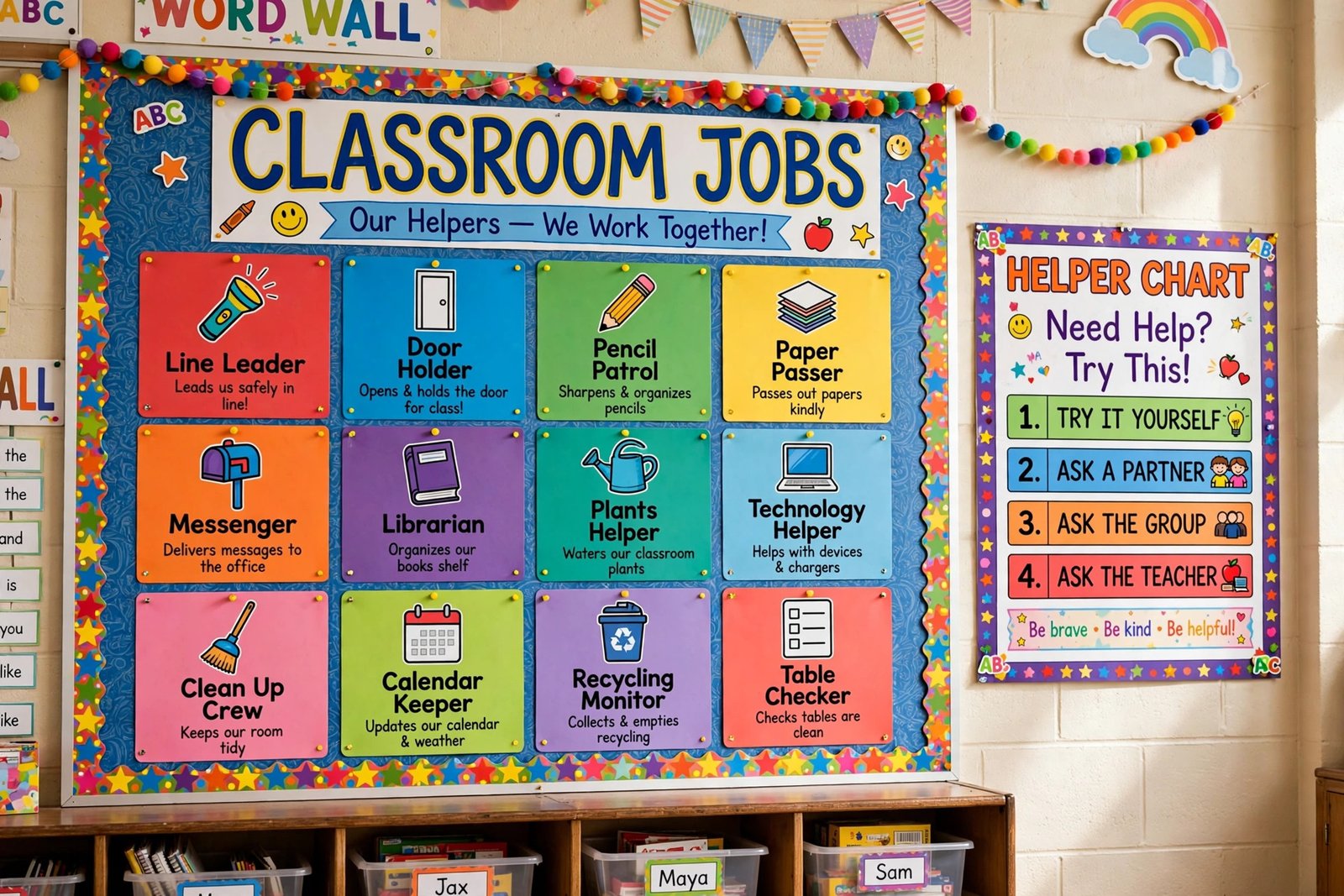

Here is what you need to start a classroom job system that actually works. You need a simple chart that every child can read at a glance, a short list of jobs that match real classroom needs, a rotation plan that gives every child a turn, and about ten minutes in the first week to teach each job well. You do not need fancy pocket charts, printed badges, or a big reward system. You need clear jobs, clear steps, and a steady routine that children can follow without you standing over them. That is the whole setup, and it is enough to turn a messy morning routine into a room that mostly runs itself.
When children have real jobs, they stop waiting to be told what to do. They walk in, check the chart, and get started. A child who waters the plants learns to notice when something needs care. A child who tidies the book corner learns that shared spaces stay usable only when someone takes care of them. None of this happens because of a lecture about responsibility. It happens because the job is real, the steps are clear, and the child is trusted to do it.
This article gives you fifteen jobs you can use as they are or shape to fit your room. The jobs are grouped into daily helpers, weekly leaders, care jobs, and learning jobs. Each job includes what the child does, how to teach it, and what to do when a child forgets. Pick a few to start with if you are new to classroom jobs. Add more as the routine settles. The goal is not to fill every minute of the day with jobs. The goal is to give every child a small, real piece of the classroom to look after.
Table of Contents
How to Set Up a Job System That Lasts
Start with the jobs your room actually needs. Look at your morning routine and your end of day routine and notice where things get stuck. Papers pile up because no one collects them. Chairs stay out because no one owns that step. The pencil bin runs dry because no one checks it. Those stuck points are your first jobs. Write each job on a card with three short steps. Keep the steps simple enough that a child can read them or follow a picture version.
Teach one job at a time during the first week. Show the steps, let a child try them while you watch, and then let that child teach the next child. Put the job chart where children pass it every morning, near the door or beside the morning meeting area. Keep the chart visible and check it yourself each morning so children see that you take it seriously.
Rotation keeps the system fair. Some teachers rotate daily, some weekly, and both work. Daily rotation gives more children a turn quickly, but it means more teaching at the start. Weekly rotation lets children get really good at a job before they move on. Choose one rhythm and stick with it for a month before you change it. If a child is absent, let a volunteer cover the job for that day and note it on the chart so the absent child still gets a full turn later.
Daily Helpers
These jobs happen every day and keep the room running from morning to dismissal. They are a good starting point because children see the result right away.
1. Door Greeter
The door greeter stands near the door as classmates arrive and says good morning by name. Teach the child to smile, make eye contact, and use a calm voice. Give the greeter a short list of greetings to choose from. If the greeter forgets, a quiet reminder from you is enough, and a buddy can stand beside them for the first few days. This job builds friendly confidence because the child practices speaking to many people in a low pressure way. Rotate daily so many children get the chance, and praise the effort rather than the smoothness of the greeting.
2. Attendance Helper
The attendance helper counts who is present and reports the number to you during morning meeting. Show the child how to use the class list, mark each name, and double check the count before reporting. Keep a simple checklist on a clipboard so the steps stay the same each day. If the helper miscounts, ask them to count again slowly instead of correcting the number yourself. This job teaches careful counting and attention to detail. It takes about three minutes and works well for children who like quiet, focused tasks.
3. Materials Manager
The materials manager hands out supplies at the start of a lesson and collects them at the end. Teach the child to count items as they go out and count them again as they come back. Use labeled bins so the child can see where each item belongs. If something goes missing, the manager checks desks and the supply table before asking you for help. This job builds organized habits and saves you several minutes in every lesson. Rotate weekly so the child learns the full cycle of a lesson from setup to cleanup.
4. Chair Checker
The chair checker makes sure chairs are pushed in and desks are straight at the end of the day. Walk the rows with the child once and point out what straight looks like in your room. Give the checker a small routine, such as starting at the front row and moving back. If the checker forgets a row, simply ask them to walk the room once more. This is a short job, about two minutes, and it suits children who like movement. It teaches shared responsibility because the whole room looks better when one child owns this final check.
5. Paper Passer
The paper passer collects finished work and hands out new sheets during lessons. Teach the child to move row by row. Show them how to stack papers neatly. If the passer rushes, slow the routine down with a simple rule, such as one row at a time. This job takes about two minutes per lesson and fits children who enjoy helping others. It builds steady reliability because classmates depend on papers arriving in order and on time.
Weekly Leaders
Weekly jobs give children more time to grow into a role. They suit jobs that need practice or that shape the tone of the week.
6. Line Leader
The line leader walks at the front of the line and sets the pace for the class. Teach the child to walk, not run, to stop at doors, and to wait for the class before moving through a doorway. Practice the route together once, including where to stop and turn. If the leader walks too fast, remind them that a good leader keeps the group together. This job builds calm leadership because the child learns that leading means thinking about the group, not just going first. Rotate weekly so the child has several days to settle into the pace.
7. Morning Message Leader
The morning message leader reads the morning message aloud and points to each word. Write the message in large print and let the child preview it before the class gathers. Show the child how to pause at the end of each sentence and how to ask the class a simple question about the message. If the child stumbles on a word, let a classmate help rather than jumping in yourself. This job builds reading confidence in a real setting. It takes about five minutes and works well for children who are ready for a speaking role.
8. Calendar Helper
The calendar helper updates the date, the day of the week, and the weather during morning meeting. Keep the calendar pieces in one labeled pouch so the child can find them quickly. Teach the child to check yesterday's date first and then move one step forward. If the helper picks the wrong piece, ask the class to check together and let the helper fix it. This job builds time awareness and a feel for patterns across days and weeks. Rotate weekly, and pair it with the morning message job when the class is small.
9. Clean Up Captain
The clean up captain leads the last five minutes of the day by checking that each area is done. Give the captain a short checklist with pictures of each area. Teach the captain to check one area at a time. If the captain gets bossy, coach them to ask rather than order. This job builds team leadership because the child learns to guide a group without taking over. Rotate weekly and keep the same checklist.
Care Jobs
Care jobs teach children to look after living things and shared spaces. These jobs tend to become favorites because the results are easy to see.
10. Plant Caretaker
The plant caretaker waters the classroom plants and checks that they get light. Show the child exactly how much water each plant needs, using a small marked cup so there is no guessing. Teach the child to check the soil with a finger before watering, since overwatering harms plants as much as dry soil. If the caretaker forgets a day, the plants will usually be fine, and a simple note on the chart brings the routine back. This job builds gentle responsibility because the child cares for something that cannot ask for help. Rotate weekly and keep a small care card beside the plants.
11. Library Keeper
The library keeper straightens the book corner, returns books to the right bins, and reports torn pages to you. Teach the child how the bins are labeled and how to shelve a book by its cover picture or label. Give the keeper ten minutes once a week to do a full tidy, plus a quick check each day. If books pile up, help the keeper sort them into small stacks first so the job does not feel huge. This job builds respect for shared books and works well for children who love reading. Rotate every two weeks so the keeper learns the full system.
12. Pet Helper
The pet helper looks after a class pet, such as a fish, by feeding it and checking its water. Teach the exact steps and watch the child once first. Keep feeding instructions on a card near the tank. If the helper is absent, you cover the job yourself rather than letting a child guess. This job builds serious responsibility because a living creature depends on it. Rotate weekly, and pair a younger child with a buddy for the first turn.
Learning Jobs
Learning jobs connect responsibility to the work of the class. They give children a role in lessons rather than only in routines.
13. Question Collector
The question collector gathers questions children have during a lesson and writes them on a question board. Teach the child to listen for questions, write them in short form, and read them back at the end of the lesson. Keep a small notebook and a pencil beside the collector's desk. If the collector misses a question, any child can add it later, so nothing is lost. This job builds curious listening because the child pays close attention to what classmates wonder about. It fits children who like writing and works in any subject.
14. Tech Helper
The tech helper sets up devices before a lesson, checks that they are charged, and puts them away at the end. Teach the child where the chargers live and what to do if a device will not turn on. Make a simple rule that the helper tells you about a problem instead of trying to fix it alone. If the helper forgets to charge a device, note it on the chart and add a charging check to the morning routine. This job builds careful handling of shared tools and saves lesson time. Rotate weekly and keep the steps posted near the charging station.
15. Homework Helper
The homework helper collects homework folders in the morning and hands back marked work at the end of the day. Teach the child to check names against the class list and to stack folders in order. Show the child how to handle a missing folder calmly by marking it on the list and moving on. If papers get mixed up, sort them together once and add a simple label to each stack. This job builds trusted reliability because classmates and you both depend on papers reaching the right hands. Rotate weekly, and keep the folder basket in the same spot every day.
When Jobs Go Wrong
Jobs will go wrong sometimes, and that is part of the learning. A child will forget, rush, or lose interest halfway through the week. The fix is usually small. Remind the child of the steps, pair them with a buddy for a day, or shorten the job until the routine sticks again. Avoid taking the job away as a punishment. Keep the job, add support, and let the child try again.
I tried the plant caretaker job in my class last month, and it flopped at first. The first caretaker watered the plants every single day, even when the soil was still damp, and one plant started to droop. I did not scold him or take the job away. I showed him the finger test for checking soil, marked a small cup for the right amount of water, and put a simple care card beside the plants. The next caretaker followed the card, and the plants perked up within a week. The fix was small, but the lesson stuck, because the children saw that checking first matters more than doing more.
Jobs at a Glance
| Job | Best age fit | Time it takes daily | Rotation |
|---|---|---|---|
| Door Greeter | Grades 1 to 5 | 5 minutes | Daily |
| Attendance Helper | Grades 2 to 5 | 3 minutes | Weekly |
| Materials Manager | Grades 1 to 5 | 5 minutes | Weekly |
| Line Leader | Grades K to 3 | 5 minutes | Weekly |
| Plant Caretaker | Grades 1 to 5 | 3 minutes | Weekly |
| Tech Helper | Grades 3 to 5 | 5 minutes | Weekly |
Use this table as a starting point, not a strict rule. A younger child can handle a job with a buddy beside them. The time column counts only the job itself, not the teaching time in the first week. Check the chart now and then to make sure no child is always last.
Frequently Asked Questions
How many jobs should I start with?
Start with four or five jobs that match your biggest routine needs, such as a greeter, a materials manager, and a clean up captain. A small set is easier to teach well, and children learn the system faster when there is less to remember. Add one or two jobs every few weeks as the routine settles. By midyear, most classes can handle ten or more jobs without extra work for you. If the chart starts to feel like a burden, cut back to the jobs that clearly help, and let the rest wait.
What if a child does not want their job?
First, find out why. Some children feel shy about speaking roles, and some feel overwhelmed by a job with many steps. Offer a swap for that week, or pair the child with a buddy so the job feels less lonely. If a child dislikes every job, let them help you design a new one that fits a real need in the room. Children take ownership of jobs they helped create. Avoid forcing a job on a reluctant child, since a forced job teaches resentment rather than responsibility.
How do I make sure every child gets a fair turn?
Keep a simple tracking sheet beside the job chart and mark each turn as it happens. Check the sheet every two weeks to spot children who have had fewer turns. If your class is large and jobs are few, add partner versions of popular jobs, such as two greeters or two materials managers. Rotate on a fixed day so children can predict their turn. When a child is absent on their day, give them the next open slot rather than skipping them.
Should I give rewards for doing jobs well?
A thank you and a specific comment, such as noting that the books were easy to find today, works better than a prize. Jobs are part of belonging to the class, not extra work that earns a treat. If you use a reward system for other things, keep jobs outside of it so that every child does a job whether or not they earn points that week. Children who do jobs for praise alone stop caring when the praise stops. Children who do jobs because the room needs them keep going.
What do I do when a child keeps forgetting their job?
Add a reminder that does not depend on you. Put a small picture card on the child's desk, add the job to the morning checklist, or ask a buddy to remind them. Check whether the job is too hard or too long, and simplify it if needed. Most forgetting fades after two weeks of steady reminders. If it does not fade, try a different job that fits the child better, and keep the tone light. Forgetting is a normal part of learning a routine, not a sign that the child cannot be trusted.
Can younger children handle real jobs?
Yes, with steps that match their age. A kindergartner can push in chairs, water one plant with a marked cup, or greet classmates at the door. Keep the steps to two or three, use pictures on the job card, and pair the child with an older buddy at first. Younger children often take jobs very seriously, and they beam when the class notices their work. The key is to match the job to what the child can actually do, and then let them do it without hovering.
How long should I keep the same job system?
Keep the core system the same all year, but refresh the jobs each term. Retire jobs that no longer fit, add jobs for new routines, and let children suggest changes. A system that never changes can feel stale by spring, while a system that changes every week feels unstable. One refresh per term strikes a good balance. Ask the class what is working and what is not, and let them vote on one or two new jobs. That review itself teaches responsibility.
Final Thoughts
A classroom job system does not need to be perfect to be powerful. It needs to be real, steady, and fair. Start small, teach each job well, and let children learn from small mistakes. Over weeks, you will notice the shift. Mornings run smoother, supplies last longer, and children start to notice what the room needs without being asked. That noticing is responsibility in its truest form, not a poster on the wall but a habit in daily life.
Keep the chart visible, keep the rotation fair, and keep your own expectations kind. Some weeks will run beautifully and some weeks will need a reset, and both are normal. Give every child a second chance, and your classroom will feel less like a room you manage alone and more like a community that takes care of itself.
