
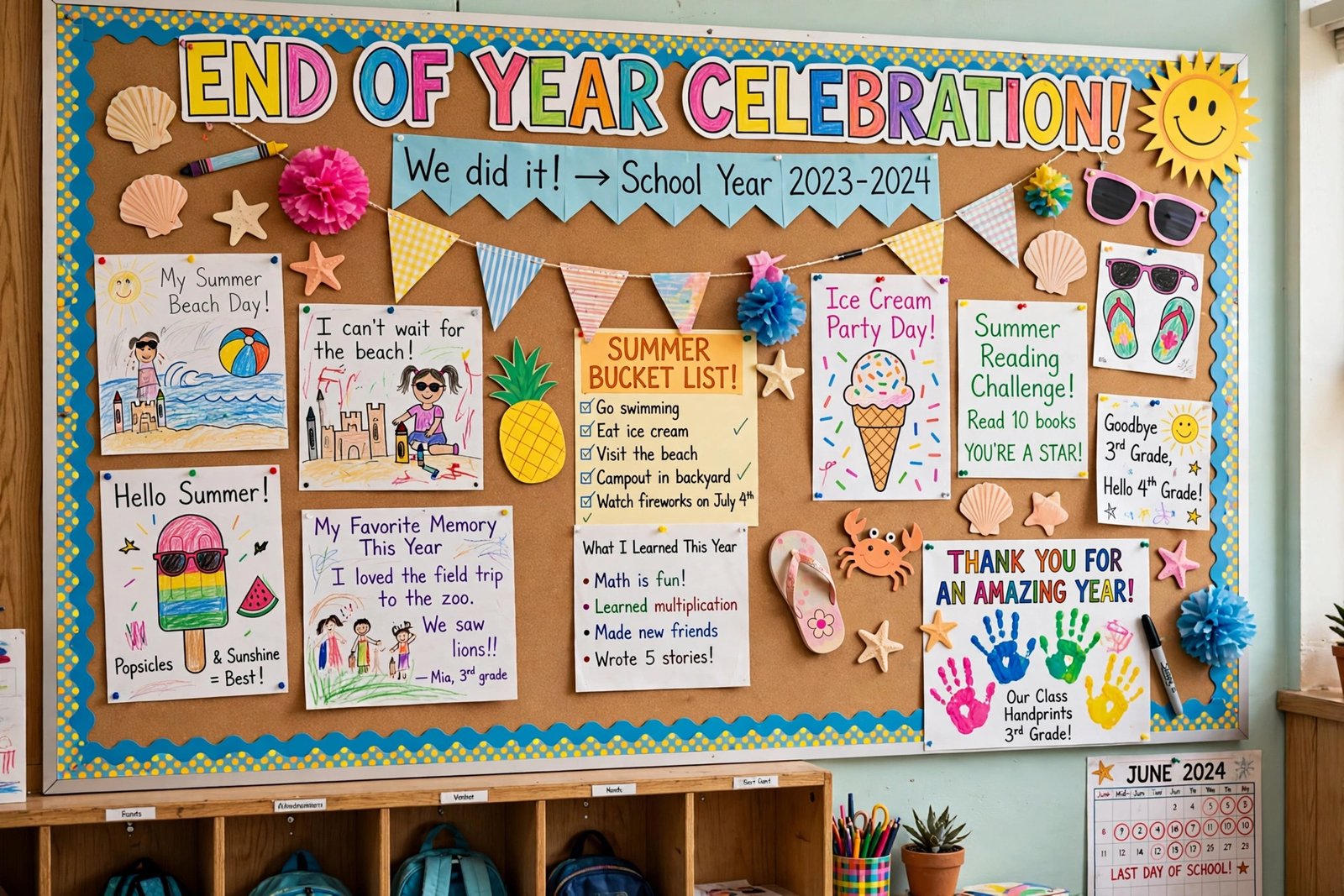

What do you put on the wall when the school year is almost over and every display still needs to look fresh? If your boards are tired, your students are restless, and the last weeks feel longer than the first ones, you are not alone. Most elementary teachers face the same problem in May and June. You want the room to feel celebratory without starting a huge project you cannot finish.
The answer is simpler than it looks. Pick a board that uses work your students already made, or work they can finish in one short sitting. Let their names, photos, drawings, and words do most of the talking. A good end of year board does not need fancy supplies. It needs a clear theme, a simple title, and enough student pieces that every child can find something that belongs to them.
The 25 ideas below are grouped to make choosing easy. You will find celebration boards for the whole class, memory boards that look back on the year, summer send off boards that point forward, and display boards that finally show off student work. Mix and match them for your classroom door, a hallway wall, or one big board that grows across the last two weeks.
Table of Contents
Celebration Boards
These boards celebrate growth, effort, and the class as a team. They work well in the hallway because parents and other classes can enjoy them too. Keep titles big, colors bright, and student pieces at eye level for younger children.
1. We Did It
Cover the board with bright paper and add a large class photo in the center. Around it, place small stars with one thing each student is proud of from this year. Students can write their own star in about ten minutes. Add a simple border in the class color so the whole board looks finished even if you are short on time. This board works best near the classroom door.
2. Our Class Superpowers
Give each student a shield or cape shape cut from construction paper. On it, they write a strength they built this year, such as reading longer books, helping a friend, or solving tricky math problems. Arrange the shields in rows with a bold title at the top. Add small gold stars between the shields for a cheerful finish. The display feels positive and every child gets the same amount of space.
3. Growth Garden
Cut flower shapes from colored paper and write each student name on a flower center. On the petals, students add skills they grew this year. Add green stems and leaves along the bottom of the board to make a garden scene. This board looks great in a hallway because the flowers are large and easy to read from a distance. You can also add a watering can cutout for a fun touch.
4. Confetti Countdown
Make a countdown board with paper balloons or confetti pieces for the last days of school. Each day, students remove one piece or flip one balloon to reveal a small class celebration, such as extra read aloud time or a drawing break. Keep the pieces large and simple so the board stays neat. This idea builds excitement without adding extra work for you each morning.
5. Star Students Shine
Create a night sky background with dark blue paper and yellow stars. Each star carries a student name and one kind thing a classmate noticed about them. Collect the kind notes in advance so every star is ready before you staple them up. Add a moon cutout and a few clouds for balance. This board is a sweet way to end the year on a warm note.
6. High Five for a Great Year
Trace large hand shapes or cut them from bright paper, one per student. On each hand, the student writes a favorite class moment or a thank you to the class. Place the hands in a wave pattern across the board with the title above them. This display is quick to build and looks full right away. It also gives students a simple writing task that feels meaningful.
7. Our Year in Numbers
Let students help you build a board of favorite numbers from the year. Include the number of books read, the number of days together, and the number of class projects finished. Use large number cutouts and short labels under each one. Students can draw small pictures to go with each number. This board teaches a little math review while it celebrates the year, and it sparks good hallway conversations.
Memory and Reflection Boards
Memory boards help students pause and notice how far they have come. These work best inside the classroom, where children can read them slowly and talk about them. Keep the writing short so the boards feel honest and easy to finish.
8. My Favorite Memory
Give each student a small card and ask them to draw or write one favorite memory from the year. It could be a field trip, a funny class moment, or a project they loved. Mount the cards in neat rows with a photo or two from class events if you have them. Add a title that is easy to read from across the room. This board often becomes the one students visit again and again.
9. Then and Now
Ask students to finish two short sentences, one about the start of the year and one about now. For example, they might write what they could do in September and what they can do now. Place the two sentences side by side on a single card for each child. The contrast makes growth visible in a very concrete way. Use two colors of paper to keep the before and after parts clear.
10. A Year of Learning
Divide the board into sections for reading, math, science, and art. In each section, place student work samples or short notes about what the class learned. Students can choose one piece they want to show for each subject. This board doubles as a review display and a celebration. Keep labels short so visitors can follow the board without needing a teacher to explain it.
11. Thank You Notes Wall
Set out small note cards and let students write thank you notes to classmates, helpers, or school staff. Display the notes on the board with push pins or tape, grouped by color. Add a few blank cards in a pocket at the side so visitors can add a note too. This board feels warm and lived in, and it teaches gratitude in a very practical way. Replace any notes that fall down before open house night.
12. Our Class Timeline
Draw a long line across the board and mark the months of the school year along it. Under each month, add a photo, a drawing, or a short label for a class highlight. Students can help you remember events and choose what belongs on the timeline. This board tells the story of the year at a glance. It also makes a great talking point when families visit the classroom.
13. Words We Learned
Collect favorite new words from the year, one or two per student, and write each word on a bright card with a short definition or drawing. Arrange the words like a word wall with a fun title at the top. This board shows real learning without feeling like a test display. Students enjoy hunting for their own word, and younger students enjoy reading words they now know.
Board Types at a Glance
Use this table to pick a board that fits your time and your space. Some boards need almost no prep, while others work better when students help build them over a few days.
| Board type | Prep time | Student involvement | Best use |
|---|---|---|---|
| Celebration board | Low | Medium, short writing | Hallway or classroom door |
| Memory board | Low to medium | High, personal writing | Inside the classroom |
| Summer send off board | Low | Medium, drawings and lists | Hallway for families to see |
| Student work display | Medium | High, choosing and mounting work | Classroom wall or hallway |
| Countdown board | Low | Low daily, high excitement | Classroom door or front wall |
| Thank you wall | Low | High, short notes | Classroom wall near the entrance |
Summer Send-Off Boards
Summer boards point students toward what comes next. They feel hopeful and light, and they give families something fun to read at pickup time. Keep the tone upbeat and the writing short so students finish with energy to spare.
14. Off to Summer
Create a beach or road trip scene with sun, clouds, and simple paper cutouts. Each student adds a small suitcase or beach ball with one thing they want to do this summer. The board looks cheerful and it gives students a chance to dream a little before the break. Use bright colors and a large title so the board stands out in the hallway.
15. Summer Reading Picnic
Draw or cut out a picnic blanket scene and place book shapes on it. Each student writes the title of a book they want to read this summer, or a book they loved this year. Add paper ants, cups, and plates for a playful touch. This board encourages reading without making it feel like homework. Families often take photos of it, so keep the titles neat and easy to read.
16. Ready for Next Grade
Let students write one thing they feel ready for in the next grade, such as longer chapter books or harder math. Place each note on a stepping stone shape leading across the board toward a school building cutout. This visual makes moving up feel exciting rather than scary. Add arrows between the stones so the path is clear from left to right.
17. Summer Bucket List
Give each student a small bucket shape and ask them to list three simple summer plans, such as riding a bike, reading outside, or helping in the garden. Mount the buckets in rows with a title that invites visitors to read them. This board is easy to build in one sitting and it always draws smiles. Keep the lists short so every bucket fits neatly on the board.
18. Sunshine Goals
Cut large suns from yellow paper and write one summer goal on each ray. Goals can be simple, such as learning to swim, practicing drawing, or reading every day. Place the suns across a blue sky background with a few clouds. This board feels warm and hopeful, and it works well for younger students who like big shapes and bright colors. Add student names to the center of each sun.
19. Adventure Awaits
Make a simple map scene with a path, trees, and a compass cutout. Each student adds a flag along the path with a place they want to visit or explore this summer. The flags can be real places or imaginary ones, which keeps the activity open for every child. This board sparks good conversations and looks great near the classroom door. Use one color for the flags so the path stays easy to follow.
Student Work Displays
The end of the year is the perfect time to show work that never made it to the wall. These displays honor effort and give students a last moment of pride. Choose pieces that are finished and sturdy enough to stay up for a week or two.
20. Gallery of Our Best Work
Let each student choose one piece of work they are most proud of, from writing, art, or a class project. Mount the pieces in a grid with name labels under each one. Add a simple frame border around each piece using colored paper. This gallery feels like a real art show and it gives every student equal space. It also helps families see progress in a very direct way.
21. Author Spotlight
Turn writing into the star of the board. Mount short stories, poems, or paragraphs in neat rows with author names in bold. Add a small star or pencil cutout next to each piece. Students can read each other's work during quiet time, which builds pride in writing. Keep the pieces short so visitors can read several without feeling rushed.
22. Art Show Wall
Display art from across the year, one piece per student, with a short label naming the medium or project. Use a single background color so different art styles look unified. Add a title that sounds like a real gallery show. This board is simple to assemble because the art already exists, and it looks impressive with very little extra work. Make sure pieces are securely attached before families arrive.
23. Science Discoveries
Show science work such as labeled diagrams, observation sheets, or photos of experiments. Group the pieces by topic, such as plants, weather, or simple machines. Add short captions written by students explaining what they found out. This board shows real learning and it gives students a chance to explain their thinking. Keep captions to one or two sentences so the board stays readable.
24. Math in Real Life
Ask students to bring in or draw one example of math they use outside school, such as measuring ingredients, counting money, or telling time. Display the examples with short labels and simple drawings. This board connects classroom math to daily life in a concrete way. Students enjoy seeing how different their examples are, and the board often sparks ideas for summer practice.
25. Class Book Cover Wall
Let each student design a book cover for a class book about the school year. The cover needs a title, an author name, and a drawing that shows the year. Display the covers in rows like books on a shelf, with a shelf line drawn along the bottom. This board is creative, personal, and easy to build in one art period. It also makes a lovely keepsake photo for families.
Frequently Asked Questions
How much time should an end of year board take?
Most of these boards take one short class period to build if student pieces are ready in advance. Plan about 20 to 30 minutes for writing and drawing, plus time for you to mount the pieces. If you are short on time, choose a board with large shapes and short writing, such as the Growth Garden or the High Five board.
What if some students finish much faster than others?
Keep a few extra tasks ready, such as coloring a border piece, cutting extra shapes, or writing a second note for the board. Early finishers can also help mount pieces or check that names are spelled correctly. This keeps the room calm and gives every student a useful role while others finish writing.
How do I make sure every student is included?
Count your student pieces before you start mounting anything. If a child is absent, save a blank shape with their name on it and add their piece later. Avoid boards where only a few students are featured, since end of year displays should celebrate the whole class. A quick count at the start prevents an awkward gap later.
Can I reuse supplies I already have in the classroom?
Yes, and that is often the best plan. Construction paper, markers, scissors, and tape cover almost every idea on this list. Use a single background color to make mixed pieces look unified, even if the shapes are different. Reusing supplies also keeps the project low cost and low stress in a busy final week.
Should end of year boards go in the classroom or the hallway?
Both places work, and the choice depends on your goal. Hallway boards celebrate the class for visitors and families, so choose bold titles and large pieces. Classroom boards invite slower reading and reflection, so choose memory boards and work displays. If you can only build one board, pick the spot where families are most likely to see it.
Final Thoughts
The best end of year board is not the fanciest one. It is the one where every student can point to a piece and say that part is mine. Start with a theme you like, keep the writing short, and let student work carry the display. If you run out of time, a simple background, a clear title, and a neat row of student pieces will still look wonderful.
Take a photo of your finished board before the last day. You will enjoy looking back at it, and it gives you a ready idea for next year. More than that, it captures a class that learned, laughed, and grew together. That is worth celebrating on any wall.
