
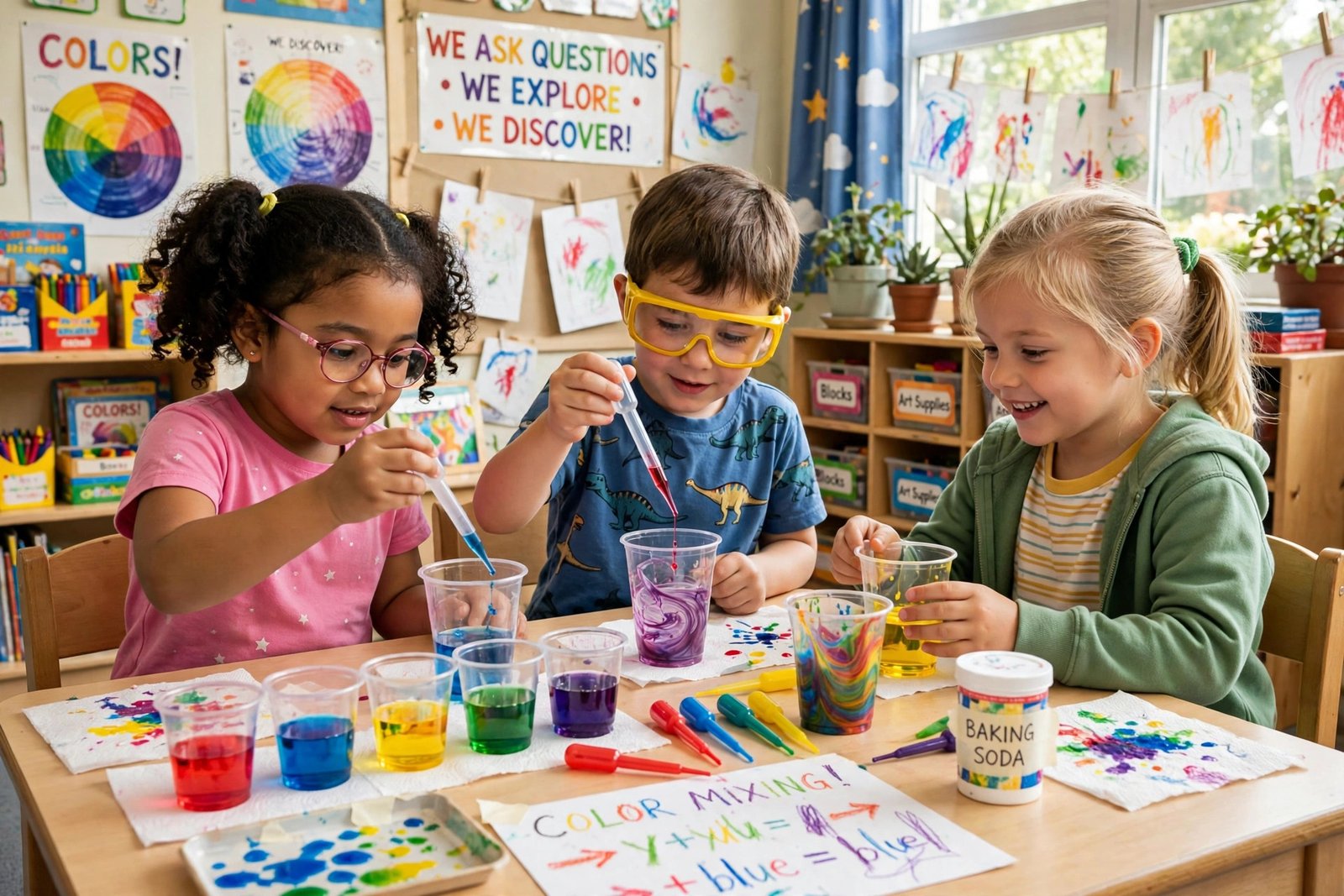

Here is what you need to run real science experiments in a kindergarten classroom. A small box of pantry materials. A tray or plastic tablecloth under every activity. Fifteen minutes of protected table time. That is honestly the whole supply list, and it is enough to fill your entire year with hands-on science.
Here is why these experiments work so well with four, five, and six year olds. Kindergarteners learn through their senses, not through lectures. They need to touch, pour, watch, and sometimes make a glorious mess. Every activity below uses non-toxic household materials, takes five to fifteen minutes of active time, and teaches a genuine science concept like absorption, density, static electricity, or plant growth. You will see kids predict what will happen, watch it happen, and then argue about what happened next. That is the scientific method in action, minus the vocabulary test.
One more thing before we start. These experiments are grouped by concept so you can plan a whole science unit or pull one out for a rainy-day center. Each one includes the materials, the steps, what kids will observe, and a cleanup note. If you only read one extra section, read the comparison table first. It tells you at a glance which experiments fit your mess tolerance for any given day.
Table of Contents
Compare Science Experiment Types
Use this quick reference when you plan your week. It shows the core concept each experiment teaches, the materials you will reach for, and an honest rating of the cleanup involved. Pick low cleanup days for busy afternoons and save the messy winners for days when you have extra wipes on hand.
| Experiment | Concept Taught | Materials | Cleanup Effort |
|---|---|---|---|
| Walking Water | Capillary action | Cups, paper towels, food coloring, water | Low |
| Sink or Float | Density and buoyancy | Bowl of water, small classroom objects | Low |
| Melting Ice Races | States of matter | Ice cubes, salt, plates | Low |
| Color Mixing Bags | Color theory | Sealable bags, washable paint | Very low |
| Rainbow Milk Swirls | Surface tension | Whole milk, dish soap, food coloring, plate | Medium |
| Celery Color Change | Plant absorption | Celery stalks, water, food coloring, cups | Low |
| Crayon Resist Messages | Water resistance | White crayon, paper, watercolor paint | Low |
| Static Balloon Hair | Static electricity | Balloons, tissue paper scraps | Very low |
| Tornado in a Bottle | Air pressure and vortexes | Two plastic bottles, water, duct tape | Very low |
| Dancing Raisins | Gas bubbles and buoyancy | Clear soda, raisins, cups | Medium |
| Baking Soda Volcano | Acid and base reaction | Baking soda, vinegar, tray, food coloring | Medium |
| Floating Egg | Salt water density | Egg, water, salt, tall glass | Low |
| Oobleck Goo | Non-Newtonian fluid | Cornstarch, water, bowl | Medium |
| Magnetic Sorting Tray | Magnetism | Magnet wand, tray, metal and nonmetal objects | Very low |
| Shadow Tracing | Light and shadows | Chalk, sunny sidewalk or a flashlight | Very low |
Water Experiments
Water is the best science lab a kindergarten class can afford. It is free, familiar, and forgiving. Kids already have ideas about water from bath time and puddles, which means they will make real predictions instead of shrugs. These three experiments build the habits of observation and comparison that every later science lesson depends on. Start here at the beginning of the year and return to water play whenever the class needs something calm and absorbing.
1. Walking Water
Line up three clear cups on a tray. Fill the first and third with water and tint the first red and the third yellow, leaving the middle cup empty. Fold two paper towel strips and rest one between each pair of cups. Kids watch colored water creep up the towels and into the middle cup, slowly turning orange as they mix. They observe capillary action pulling water along the fibers. Cleanup is easy. Toss the towels and rinse the cups.
2. Sink or Float
Fill a wide bowl halfway with water and set out eight to ten small objects like a crayon, a coin, a leaf, a bottle cap, a rubber band, and a grape. Each child picks an object, predicts sink or float, and drops it in. Kids notice that heavy is not the whole story. A grape sinks while a folded foil boat floats, which introduces density with no worksheet. Have them sort objects into two piles afterward. Keep a towel under the bowl and another nearby for drips.
3. Melting Ice Races
Give each child a plate with two ice cubes. They rub salt on one cube and leave the other plain, then watch which melts first. The salted cube wins within minutes. Explain in simple terms that salt breaks frozen water apart faster, which is why grown-ups sprinkle it on icy sidewalks. This is a perfect states of matter lesson because the solid to liquid change happens right before their eyes. Cleanup is just water on a plate. Pat hands dry and you are done.
Color Mixing Experiments
Color is pure kindergarten magic, and color science is one of the easiest ways to sneak real learning into art time. These four experiments let kids create something beautiful while learning that primary colors combine into secondary colors and that different liquids behave in different ways. Keep smocks on and keep the food coloring bottles in your hand, not theirs. A little control at the setup stage saves a lot of scrubbing later.
4. Color Mixing Bags
Squirt a blob of red and a blob of yellow washable paint into a sturdy sealable bag, press the air out, and seal it tight. Hand the bag to a child and let them squish, squeeze, and knead it. Orange appears right under their fingers, with zero paint on hands or tables. Tape the edges for extra insurance with enthusiastic squishers. This is the cleanest color mixing experiment on the list, ideal for carpeted classrooms. When colors blend fully, flatten the bag and let it dry into abstract art.
5. Rainbow Milk Swirls
Pour whole milk into a shallow plate so the bottom is just covered. Add drops of red, blue, and yellow food coloring, then touch a cotton swab dipped in dish soap to the center. Colors burst outward in swirls. Kids will gasp, then demand a repeat. The soap breaks the surface tension of the milk and pushes color around, and the fat in whole milk makes the effect stronger than skim. Work over a tray because kids tip the plate when excited. One plate per small group keeps crowding down.
6. Celery Color Change
Trim the bottoms of celery stalks to expose fresh ends and stand them in cups of water tinted dark blue and red. Leave them overnight on the science shelf and check in the morning. Color will have traveled up the stalk and into the leaves, showing tinted veins. Kids literally see plant absorption and how stems carry water from roots to leaves. Have them predict which color travels fastest before setting the cups out. This one teaches patience alongside science. Save one trimmed stalk so they can see the tiny tubes.
7. Crayon Resist Secret Messages
Give each child white paper and a white crayon. They write a word or draw a picture they can barely see, then paint over it with watery blue or purple watercolor. The hidden message appears because waxy crayon resists watery paint. Kids love the surprise reveal, and you can tie it to letter practice by having them write a word they are learning. Press hard with the crayon for the strongest effect. Dry paintings make a fun gallery line where the class guesses each message.
Air and Movement Experiments
Air is invisible, which makes it a fantastic challenge for little scientists. Kids cannot see air, so they have to prove it is there by watching what it moves. These three experiments give air a job to do. They are loud, physical, and wonderfully repeatable, which is exactly what a fidgety afternoon class needs. Do these when the room has energy to burn, not right after lunch.
8. Static Balloon Hair
Blow up a balloon, rub it quickly on hair or a wool sweater, then hold it near tiny scraps of tissue paper on the table. The paper jumps up and sticks to the balloon. Kids will want their own turn, so cut tissue into small bits and pass balloons around in pairs. Explain that rubbing made an invisible charge, a first taste of static electricity. Try it on a dry day because humidity weakens the effect. Let kids test whether the balloon lifts a flat sheet versus a crumpled one. Cleanup is just picking up tissue scraps.
9. Tornado in a Bottle
Fill a clear plastic bottle two thirds with water and add a drop of dish soap and some glitter. Flip a second empty bottle upside down over it and tape the mouths together tightly with duct tape. Turn the pair over and swirl hard. A glittering vortex spins down through the water like a mini tornado. Kids see how water moves fast when air gets involved, and the glitter traces the spinning shape. Assemble the bottle pairs yourself ahead of time and test each seal, since leaks are the only cleanup risk.
10. Dancing Raisins
Pour clear soda into a tall cup and drop in a few raisins. They sink, then bubble to the top and sink again in an endless cycle. Bubbles cling to the raisins and lift them, a visible lesson in gas bubbles and buoyancy. I tried this in my class last month. The first pour tipped over and three kids stirred soda with their fingers, so next time I poured myself with a tray under every cup, and it went perfectly. Wipe sticky soda off hands and tables.
Fizz and Goo Chemistry
This is the section kids will remember forever. Fizzing, bubbling, and strange gooey textures feel like real magic at this age, but every one of these experiments shows a genuine chemical reaction or material property. Go slowly here. These take a little more setup and cleanup, so plan them for mornings when you have energy. Always pour the vinegar yourself, and keep a damp sponge within arm's reach.
11. Baking Soda Volcano
Pack two tablespoons of baking soda into the crater of a small playdough volcano and add a few drops of red food coloring. When kids pour in a quarter cup of vinegar, red lava erupts and fizzes down the sides. The fizz comes from the acid and base reaction between vinegar and baking soda, which releases gas that pushes liquid upward. Let each child take a turn pouring so everyone gets the eruption moment. Build the volcano on a deep tray because lava flows farther than expected. Rinse the tray after.
12. Floating Egg
Fill a tall glass with water and have a child gently lower in an egg. It sinks. Remove the egg, stir in four tablespoons of salt until dissolved, and lower it again. Now it floats. Kids will think you did a trick, the perfect opening to explain that salt water is denser than plain water and holds the egg up. Let kids take turns adding salt to find the floating point. Pour the salty water out after, rinse the glass, and do not let anyone drink it.
13. Oobleck Goo
Mix one cup of cornstarch with half a cup of water in a bowl until it looks like thick pancake batter. Kids grab a handful and squeeze. It goes hard in their fist, then melts and drips when they open their hand. This is a non-Newtonian fluid, acting like a solid when pressed and a liquid when left alone. Kids will play with this longest of all, so plan twenty minutes and protect the table with a cloth. Wash hands with warm water after, and toss leftovers in the trash, not the sink.
Magnets and Light Experiments
Finish your science time with the two quietest experiments on the list. Magnets and shadows require no pouring, no fizz, and almost no cleanup, which makes them perfect closers for a busy science block. Both teach kids to sort and compare, a skill that shows up in every subject. You can also turn both into take-home challenges so the learning continues on the couch.
14. Magnetic Sorting Tray
Set out a tray of mixed objects like paper clips, buttons, plastic caps, coins, keys, cotton balls, and wooden beads. Hand each child a magnet wand and let them test every object, sorting the tray into sticks and does not stick piles. Kids love the guessing game and will argue about tricky items like a steel fork versus an aluminum tab. This builds magnetism intuition and classification skills together. Note that not all coins stick, which always surprises them. Count the paper clips before and after so none wander off into pockets.
15. Shadow Tracing
On a sunny day, take chalk outside and have partners trace each other's shadows on the sidewalk. Return two hours later and trace the same spots again. The shadows have moved and changed shape, opening a perfect talk about how the sun travels across the sky and how light makes shadows. No sun? Do it indoors with a flashlight against a wall. Tape paper up and trace toy shadows instead. This experiment costs nothing and leaves a sidewalk gallery to admire. Rain washes the chalk away, so cleanup takes care of itself.
Frequently Asked Questions
Are these experiments really safe for kindergarteners?
Yes, every experiment here uses non-toxic household materials like water, cornstarch, baking soda, and food coloring. Nothing involves heat, flames, or sharp tools. You should still pour liquids like vinegar yourself and supervise the soda cups, but a typical kindergarten class can handle the rest. If a child has a milk or latex allergy, swap rainbow milk for color mixing bags and use the magnet tray instead of balloons.
How do I fit experiments into a busy schedule?
Most of these take five to ten minutes of active time plus two minutes of cleanup. Run one as a center rotation while other groups do literacy or math work. That way six kids experiment while the rest of the class stays on routine. The no-prep ones like magnetic sorting and sink or float work beautifully as morning work when kids arrive at different times.
What if an experiment fails in front of the class?
Use it. Failed experiments are the best teaching moments in early science. If the static balloon does nothing on a humid day, ask the class why they think it worked yesterday and not today. Kindergarteners accept failed trials happily when the teacher stays cheerful about it. Keep a backup quick experiment like sink or float ready so you always have something that works on the first try.
How do I handle cleanup with twenty-five kids?
The tray rule saves everything. Every wet experiment sits on a tray or a plastic tablecloth, and you never hand kids the messy ingredients directly. Pour liquids yourself, open the food coloring yourself, and keep a stack of damp sponges on the table. Assign two cleanup captains per table who wipe, toss trash, and stack materials. With that routine, even the volcano takes about five minutes to reset.
How can I connect experiments to what we are already learning?
Tie water experiments to a weather unit and the celery stalks to a plant unit. The shadow tracing activity fits perfectly with a day and night theme, and the color mixing bags reinforce primary color lessons in art. The tornado bottle belongs in a weather week, and the magnetic sorting tray works during a tools and machines theme. Each experiment doubles as a vocabulary lesson, so write the key words on an anchor chart as you go.
What materials should I keep stocked all year?
Keep a science box with cornstarch, baking soda, white vinegar, food coloring, balloons, magnets, salt, clear cups, paper towels, cotton swabs, and dish soap. Almost every experiment on this list pulls from that one box. Refill it in August and January, and you will never scramble for supplies. Ask parents to donate the cups and paper towels at the start of the year. Most families are happy to send in one pack.
Final Thoughts
Fifteen experiments might sound like a lot, but you now have a science activity for nearly every week of the school year, plus spares for rainy days and surprise indoor recess. Start with the water experiments in the fall when routines are fresh, work through color and air in the winter months, and save the volcano for spring when the class can handle a little joyful chaos. Keep your science box stocked, keep the trays handy, and let the kids predict out loud before every single one. The prediction habit matters more than any single experiment because it turns watching into thinking.
Your kindergarteners will not remember the vocabulary words from these lessons. They will remember the raisins that danced, the balloon that picked up paper, and the volcano that erupted on the science table. That memory of excitement is what turns into curiosity in first grade and confidence in third. You are not just filling fifteen minutes. You are building the foundation of every science class they will ever take, one splashy, fizzing, glittering experiment at a time.
