

Table of Contents
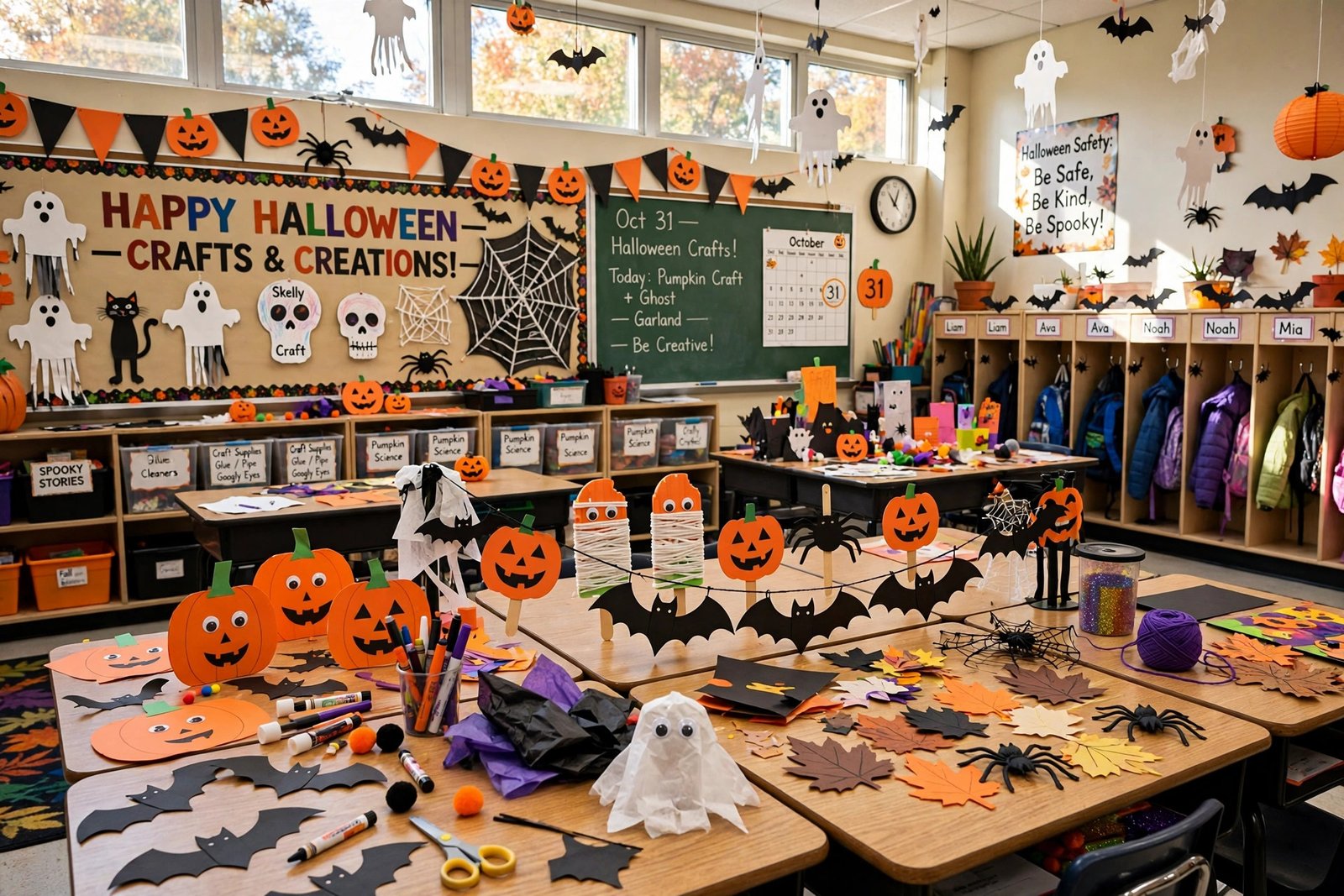
What Can Halloween Look Like in an Elementary Classroom?
What do you do with a class full of kids who are buzzing about Halloween weeks before the holiday even arrives? You cannot stop the excitement, and honestly, you would not want to. The costumes, the candy talk, the spooky stories on the playground, it is all fuel. The smartest move is to take that energy and turn it into learning. Halloween-themed activities work because they meet students where their minds already are. Kids will happily write a story, solve a math problem, or measure a mixture if a friendly ghost or a grinning pumpkin is part of the setup.
This article gives you 20 classroom-ready activities that cover literacy, math, art, science, and movement. Each one is designed for elementary kids and uses materials you probably already have in your supply closet. Every activity is easy to adjust for kindergarteners or for fifth graders, and several include notes for keeping things comfortable for families who do not celebrate Halloween. I have kept the tone classroom-safe throughout. think pumpkins, friendly monsters, autumn science, and creative play. Nothing gory, nothing scary, just the sweet, silly side of the season.
One quick note before we start. some of your students may not celebrate Halloween for religious or family reasons. That is worth planning for, and it does not mean skipping the fun. Throughout this list you will find suggestions for framing activities around fall harvest themes or friendly monster themes so every child can take part without a single worksheet feeling off-limits. A quick note home explaining the learning goals behind the activities goes a long way too.
Literacy and Language Activities
Reading and writing love a good seasonal hook. Kids who groan at regular writing prompts will suddenly produce pages when the prompt mentions a haunted house or a talking pumpkin. Here are six literacy activities that build real skills behind the fun.
1. Friendly Monster Descriptive Writing
Hand each student a piece of orange or purple paper and ask them to draw a friendly monster first, then write a descriptive paragraph about it. Push for concrete details. how many eyes does it have, what color is its fur, what does it smell like, what is its favorite snack? A simple sentence bank on the board (It has., Its favorite food is., When it laughs it sounds like.) gives younger writers a starting line. Read a few aloud for a funny class share.
2. Haunted House Story Starters
Write five story starters on strips of paper and let students draw one from a plastic pumpkin. Examples include "On the night the pumpkin started talking." and "The friendly ghost in our school only appears when.". Students write for fifteen to twenty minutes, then underline the problem and solution in their story. Finish by letting volunteers read their endings. This builds narrative structure without it feeling like a lesson.
3. Halloween Vocabulary Word Wall
Challenge the class to brainstorm seasonal vocabulary words for ten minutes, then sort them into nouns, verbs, and adjectives on a big chart. Words like spooky, lantern, creak, harvest, and giggle make great examples. Students then pick three words and use each in a sentence about a friendly Halloween scene. This is a strong mini-lesson on parts of speech that feels like a game, especially if you time the brainstorm like a race.
4. Costume Persuasive Paragraph
Ask each student to draw or describe the costume they would most love to wear, then write a persuasive paragraph convincing the reader it is the best costume ever. Teach the OREO structure (Opinion, Reason, Example, Opinion) and let them build their case. Kids take this surprisingly seriously, which makes the writing strong. Cap it with a gallery walk where students leave star stickers on the most convincing arguments.
5. Halloween Poem Booklets
Teach a quick acrostic poem lesson using words like PUMPKIN, GHOST, or FALL. Each line should be a complete thought, not just one word, so students practice sentence writing. Students decorate their poems and staple them into little booklets with illustrated covers. These make lovely hallway displays and give every student a finished piece they can take home and show their families with pride.
6. Spooky Silent Reading Corner
Transform your reading corner for the week with orange pillows, a paper bat garland, and a basket of age-appropriate spooky picture books from the library. Set a timer for twenty minutes of silent reading, then let students jot one sentence about their favorite part on a sticky note for a book recommendation board. The novelty of the space pulls in reluctant readers who usually avoid the corner, which is the whole point.
Math Activities with a Halloween Twist
Halloween math keeps computation practice from feeling repetitive. Candy counting, pumpkin measuring, and monster arrays give kids a reason to care about the numbers. These five activities cover a range of skills and grade levels.
7. Candy Corn Counting and Estimation
Fill a clear jar with candy corn and let the class make estimation guesses, recording each guess on a class graph. Then count the candy corn in groups of ten to practice place value and skip counting. Younger students can sort the candy by color first and make simple bar graphs. A small reminder about not eating the counters keeps things tidy, and you can offer a few pieces at the end as a treat.
8. Pumpkin Measurement Math
Bring in three pumpkins of different sizes and give small groups measuring tapes and yarn. Students measure the circumference, height, and weight (with a simple scale) of each pumpkin and record the results in a data table. Then they compare and order the pumpkins from biggest to smallest. This is hands-on measurement and data recording that feels like a science experiment, and kids remember the vocabulary because they used it with their hands.
9. Monster Array Art
Give students dot stickers and large sheets of paper, and have them build multiplication arrays shaped like friendly monsters. three rows of four eyes, five rows of six dots for the body. Underneath each monster they write the multiplication fact it shows. For younger kids, swap in addition facts with groups of sticker spots. Hang the finished monsters on a math facts display that actually looks like art.
10. Halloween Pattern Necklaces
Set out pony beads in orange, black, white, and purple and ask students to string repeating patterns on yarn, like orange-orange-black or purple-white-orange-black. Older students can create ABC or AABB patterns and write the pattern rule next to their finished necklace. This sneaks real pattern work into a craft kids are excited to wear. Tie the ends carefully and let students take them home as wearable math.
11. Trick-or-Treat Word Problems
Write a set of multi-step word problems set in a trick-or-treat scenario. "Maya collected 47 pieces of candy and gave 12 to her brother. How many are left?" Print them on pumpkin-shaped cards and let students solve them in pairs. For a fun twist, have pairs write their own problems and trade them. The real-world story context makes the math feel purposeful, and the trading part builds problem-writing skills too.
Creative Arts and Crafts
Art time in October practically plans itself, but the trick is giving students structure so the crafts teach something too. These five activities build fine motor skills, color theory, and creativity, and each one ends with something worth displaying.
12. Tissue Paper Pumpkin Collages
Tear orange and green tissue paper into small squares and have students glue them onto pumpkin outlines to create textured collages. Show a quick demo of overlapping the pieces for a layered look, then let students work at their own pace. Talk about warm and cool colors by adding a blue or purple background so the pumpkin pops. The torn edges give every piece a soft, painterly look that younger kids can achieve easily.
13. Paper Plate Monster Masks
Give each student a paper plate and let them cut out eye holes (you do this step for the little ones), then decorate with paint, yarn hair, and googly eyes. Ask them to give their monster a name and one friendly personality trait written on the back. Wear the masks for a five-minute classroom parade with music. This is pure joy for kindergarten and first grade, and the personality trait adds a light writing layer.
14. Halloween Silhouette Art
Tape a bat or pumpkin silhouette cutout onto white paper, then have students paint around it with watercolor washes in sunset colors like orange, red, and purple. When the paint dries, they peel off the silhouette to reveal a crisp white shape. This teaches positive and negative space in a way that feels magical. Frame the results with black construction paper borders for a gallery-ready finish.
15. Friendly Ghost Watercolor Resist
Have students draw ghosts with white crayons on white paper, pressing hard so the wax is thick. Then they paint over the whole page with watercolors in night-sky blues and purples, and the ghosts appear like magic. This wax resist technique always gets gasps, which makes it a perfect confidence builder. Ask students to write one sentence on the back about what their ghost likes to do at night.
16. Fall Leaf Creature Puppets
Take the class outside to collect fallen leaves (or provide a basket if outdoor time is tight), then have students glue leaves onto popsicle sticks and add googly eyes to make leaf creature puppets. Each student writes two lines of dialogue their creature might say. End with puppet show pair shares where partners perform a short conversation. This blends nature, art, and speaking skills, and the puppets double as a cute autumn display.
Compare Halloween Activity Types
With twenty ideas to choose from, it helps to see at a glance which activities fit your week. The table below groups the ideas by type so you can balance prep time, materials, and grade fit. I tried this in my class last month with the candy corn estimation activity, and here is what happened. the graphing took ten minutes longer than I planned because the kids kept debating their guesses, which was actually great discussion, but it pushed math into the art block. The small flop was that I used a tall narrow jar and the kids could not see the candy corn well enough to estimate fairly. The fix was simple. next time I used a wide shallow bowl so everyone could see the pieces clearly, and the estimates got much more reasonable. Lesson learned, and now it runs like clockwork.
| Activity Type | Prep Time | Materials | Best Grades |
|---|---|---|---|
| Literacy activities | 10 to 15 min | Paper, word strips, library books | K to 5 |
| Math activities | 15 to 20 min | Pumpkins, candy, beads, tapes | K to 5 |
| Art and crafts | 15 to 25 min | Paper, paint, plates, leaves | K to 4 |
| STEM and sensory | 20 to 30 min | Baking soda, vinegar, sensory bins | 1 to 5 |
| Movement and music | 5 to 10 min | Speaker, printed cards, open space | K to 5 |
STEM and Sensory Exploration
Halloween is a natural fit for science. Fizzy potions, pumpkin investigations, and sensory play let kids observe, predict, and experiment. These two activities are the ones students talk about for weeks.
17. Erupting Pumpkin Volcano
Hollow out a small pumpkin and place a cup with baking soda inside, then let students add vinegar mixed with orange food coloring using droppers. Before each eruption, ask them to predict what will happen and record their observations. Clean up is easy with a tray underneath. This classic acid-base reaction demo never fails to thrill, and the pumpkin shell makes it feel special instead of like a lab worksheet.
18. Sensory Monster Bin
Fill a bin with dried black beans, plastic spiders, and small hidden objects like letters or counting bears. Students dig through to find and sort items, which builds fine motor skills for the little ones and works as a letter-hunt station for centers. Set clear rules about keeping the beans in the bin before you start. Rotate students through in small groups so everyone gets real digging time without a mess.
Movement, Music, and Class Community
By late October, kids need to move. These last two activities burn energy, build class spirit, and give everyone a shared memory to laugh about later.
19. Freeze Dance Monster Mash
Play upbeat Halloween-themed music and have students dance like friendly monsters. when the music stops, they freeze in their silliest monster pose. Pick one student per round to be the pose judge who chooses the funniest freeze. This works as a five-minute brain break or a longer party activity. Set a volume and space rule first, then let the silliness happen. It is worth it.
20. Class Kindness Pumpkin
Place a large paper pumpkin on the wall and give students orange slips of paper. Throughout the week, anyone who catches a classmate doing something kind writes it on a slip and tapes it to the pumpkin. By Halloween, you have a gratitude pumpkin covered in specific, named kind acts. This builds a positive classroom culture right when the season gets hectic, and kids reread the slips for weeks. It is my favorite low-prep activity on this whole list.
Frequently Asked Questions
How do I include students whose families do not celebrate Halloween?
Frame activities around fall harvest, friendly monsters, or autumn science instead of Halloween specifically. A pumpkin measuring activity becomes a harvest science activity, and monster writing becomes a creative writing activity. Send a quick note home explaining the learning goals so families see the academic purpose. When in doubt, offer the student a parallel autumn-themed alternative for any activity that feels too Halloween-specific.
How much do these activities cost to run?
Most of the materials are things you already have. paper, paint, beads, and library books. The only purchases I usually make are a few small pumpkins, a bag of candy corn for counting, and baking soda and vinegar for the volcano. Ask families to donate a pumpkin or two and you can often run the whole set for under ten dollars. Dollar store finds like plastic spiders and paper plates stretch the budget even further.
Can these activities work for kindergarten?
Yes, with small tweaks. Focus on the sensory bin, pattern necklaces, mask making, and leaf puppets, which are naturally hands-on. Replace written paragraphs with drawings plus one dictated sentence, and do measuring as a whole-class demo instead of small groups. Keep directions to two steps at a time and build in plenty of movement breaks between activities. The kindergarteners will love every minute of it.
How do I fit 20 activities into one week?
You do not have to. Pick one literacy, one math, one art, and one STEM activity for a balanced week, then save the rest for the following week or for early-finisher choice time. Many of these work as centers or stations that students rotate through over several days. Think of this list as a menu, not a to-do list, and choose what fits your schedule and your kids.
Are these activities aligned to learning standards?
The literacy and math activities map naturally to common reading, writing, and math standards. descriptive writing, narrative structure, parts of speech, measurement, data, patterns, and multiplication. You can note the target skill on each lesson plan or parent note to make the alignment clear. The art and STEM activities build fine motor skills, observation, and prediction, which support early science and art standards as well.
What if I only have one class period for Halloween fun?
Pick the erupting pumpkin volcano for a memorable science moment, the freeze dance for an energy release, and the kindness pumpkin as a week-long background activity. That trio gives you science, movement, and community in about forty-five minutes of active time. You can also run the candy corn estimation as a quick ten-minute warm-up that day.
How do I manage the sugar and candy conversation in class?
Use candy as a learning tool, not a snack. counting pieces, sorting by color, and graphing keeps the focus on math. If families send candy, collect it and distribute it at the end of the day rather than letting it circulate during class. Set a clear rule on day one that candy stays in the jar during activities. A short note home about your classroom candy policy prevents most surprises.
Final Thoughts
Halloween in the classroom does not need to be a week of chaos or a week of worksheets with clip art. It can be something better. a week where the season does the heavy lifting for you. When kids are excited, they write more, count more carefully, and experiment more boldly. All you have to do is give that excitement a shape, whether it is a monster array, a fizzing pumpkin, or a wall covered in kind words.
Pick a few activities from this list that match your kids and your schedule, gather your pumpkins and your paper plates, and let October do what it does best. Your students will remember the erupting pumpkin and the monster parade long after they forget the regular worksheets. And if you keep the activities inclusive, every child in your room gets to be part of the memory. That is what a great classroom Halloween is really about.
Happy teaching, and have a wonderful Halloween season with your class.
