
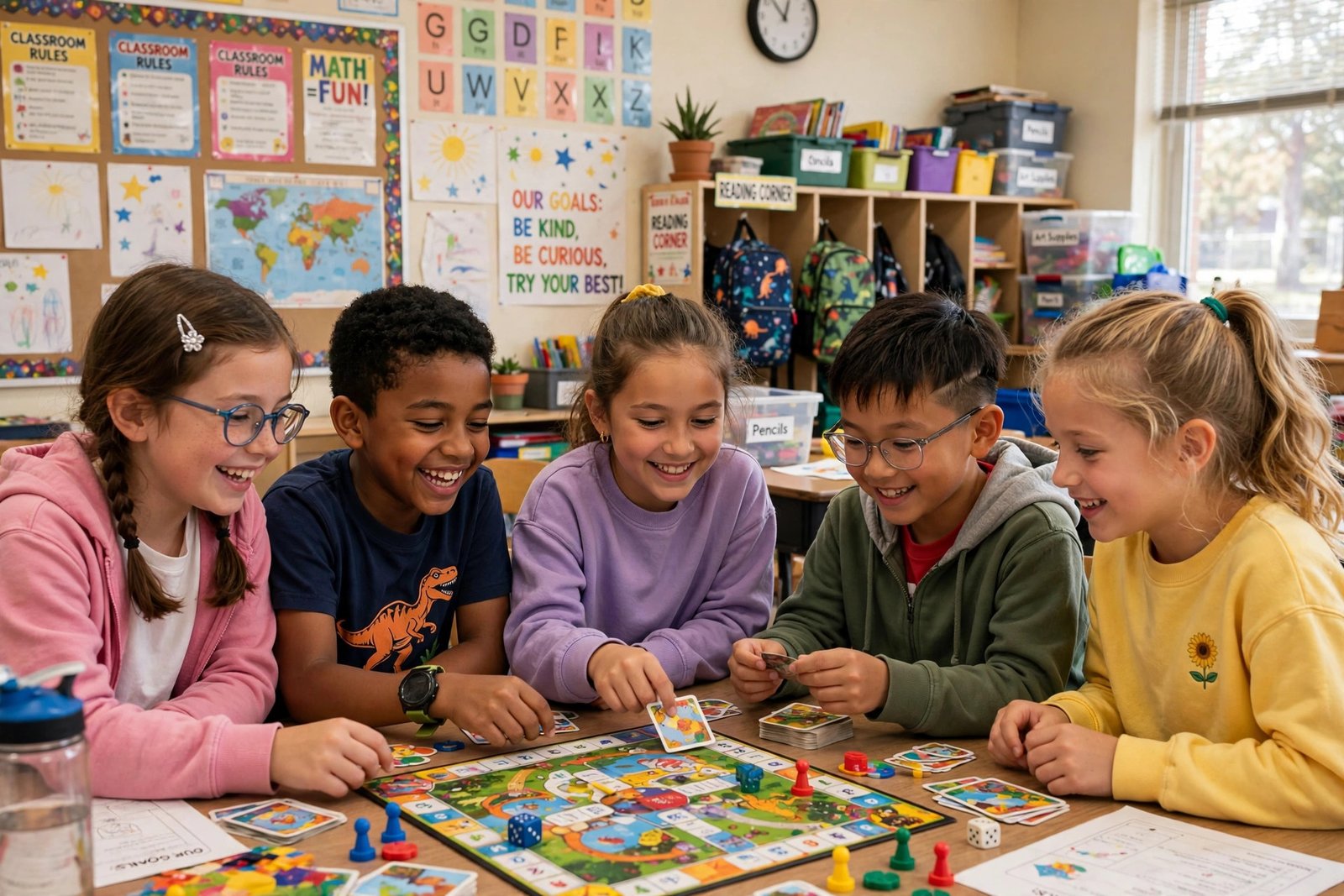

Indoor recess games are structured play activities that keep elementary students active, engaged, and happy when the playground is off-limits. From high-energy movement games that burn off wiggles to quiet guessing games that sharpen focus, these games turn a rainy-day recess into a positive part of the school day instead of a lost twenty minutes.
The best indoor recess games for elementary students share three traits. They need little to no setup, they work in a regular classroom space, and they give every child a way to take part. This roundup collects 15 teacher-friendly options that fit those standards, grouped by energy level so you can match the game to your class and your day.
Table of Contents
Why Indoor Recess Deserves a Real Plan
Rain, extreme heat, air-quality alerts, and schedule changes all push recess indoors at some point during the year. When that happens, the difference between a smooth twenty minutes and a chaotic one usually comes down to planning. Kids still have the same need to move, laugh, and socialize. A plan gives that energy somewhere healthy to go.
Teachers who plan ahead for indoor recess days report calmer transitions back to lessons. A game with clear rules holds attention better than free time at desks, and it ends on the teacher's schedule instead of dragging. Keep a short list of favorite indoor recess activities posted near your desk, and the surprise of a sudden indoor day becomes a welcome change of pace instead of a scramble.
Quick Comparison, Picking the Right Indoor Game
Use this table to scan the full list at a glance. Energy level tells you how much movement the game involves. Setup time and space needed help you pick something realistic for the time and room you have. The Best For column flags the grade or situation each game suits.
| Game | Energy Level | Setup Time | Space Needed | Best For |
|---|---|---|---|---|
| 1. Corners | High | 1 minute | Moderate | Whole class, K to 2 |
| 2. Balloon Keep-Up | High | 2 minutes | Moderate | Burning energy fast |
| 3. Freeze Dance | High | 2 minutes | Moderate | Large classes, K to 5 |
| 4. Hot Potato Relay | Medium | 3 minutes | Open aisle | Grades 2 to 5 |
| 5. Silent Ball | Low | 1 minute | Seated rows | Resetting after lunch |
| 6. Word Building Race | Low | 2 minutes | Desk clusters | Literacy review, 1 to 5 |
| 7. Story Chain | Low | None | Seated | Language arts warm-up |
| 8. Memory Tray | Low | 3 minutes | Table groups | Observation skills |
| 9. Tower Builders | Medium | 4 minutes | Table groups | Grades 3 to 5, teamwork |
| 10. Classroom Scavenger Hunt | Medium | 10 minutes | Whole room | Rainy-day excitement |
| 11. Human Knot | Medium | None | Whole room | Team building, 3 to 5 |
| 12. Mirror Match Pairs | Low to medium | 1 minute | Aisles | Partners, K to 3 |
| 13. Twenty Questions | Low | None | Seated | Science vocabulary review |
| 14. Draw and Guess | Medium | 2 minutes | Board area | Whole class or teams |
| 15. What Am I | Low | 2 minutes | Seated | End-of-recess wind-down |
Active Games That Burn Energy
These four games are built for days when kids come inside restless. Each one lets students move their bodies in a structured way, which usually means a smoother return to lessons afterward.
1. Corners
Assign each corner of the room a number from one to four and display the numbers on the board. Students stand and walk to any corner they choose while one player, the counter, stands in the middle with eyes closed. The counter counts to ten and calls a number. Every student standing in that corner sits out, and the rest keep playing. Rounds take about a minute each, so a full game fits easily into recess. Teachers love it because there is zero equipment and the whole class can play at once. Keep rounds quick and rotate the counter often to keep everyone involved.
2. Balloon Keep-Up
Blow up three or four balloons before recess or at the start of the game. Divide the class into small teams and give each team one balloon. The goal is simple. keep the balloon in the air by tapping it. If it touches the floor, the team counts one point against themselves and tosses it back up. The team with the fewest drops after five minutes wins. Kids love the physical challenge, and the game works even in a crowded room because balloons move slowly. Use only soft taps so the noise stays manageable. When a balloon pops, pause the game and swap in a spare to avoid the popping becoming the main attraction.
3. Freeze Dance
Play music from a classroom speaker and let students dance, jump, or march in place between the desks. When the music stops, everyone must freeze exactly as they are. Anyone who moves after the freeze call sits out for one round and then rejoins. Short songs of two to three minutes keep the pace lively. This classic works from kindergarten through fifth grade because the rules are instant and the movement is self-scaled. Add simple variations like slow-motion rounds or robot rounds to keep older kids interested. Keep the volume moderate so neighboring classrooms stay undisturbed.
4. Hot Potato Relay
Split the class into two lines facing each other across an aisle. Pass a soft object like a beanbag or rolled-up socks down each line while music plays or a leader claps a rhythm. When the sound stops, the two students holding the objects step out and join the cheering section. The game continues until one line runs out of players. Students stay alert because the object moves quickly, and the relay format adds gentle competition. Set the rule that passes must be gentle underhand tosses to protect desks and nearby students. The winning line gets the satisfaction of the title plus first choice of the next game.
Quiet Games for Calm Classrooms
Sometimes the class needs calm more than movement. These four games keep noise down and work well for the days right before a test or right after a loud special.
5. Silent Ball
Students stand behind their desks or sit in a circle and toss a soft foam ball to one another in complete silence. The rules are strict. no talking, no laughing out loud, and no drops. Breaking any rule means sitting out for the round. The catcher must make a clean catch and then toss to someone else. Because silence is part of the game, the room settles quickly. Teachers use this as a calm reset after lunch recess or before a focused lesson. Start with slow, easy tosses for younger grades. A foam ball is essential here so missed catches do not bounce loudly across the room.
6. Word Building Race
Give each table group a set of letter cards or magnetic letters. Call out a category such as animals, foods, or things in the classroom, and set a two-minute timer. Teams race to build as many real words as they can from their letters, writing each word on a whiteboard or paper. When time ends, groups count their words and read them aloud for a quick check. This game doubles as a sneaky vocabulary review that kids do not realize is practice. Adjust difficulty by limiting letters for younger students or requiring minimum word lengths for older ones. Let a different student be the reader each round to spread participation.
7. Story Chain
One student begins a story with a single sentence, such as "Maya found a glowing key under her desk." The next student adds one more sentence, and the chain continues around the room. The only rules are that each addition must connect to the story and stay school-appropriate. Funny twists are allowed and usually arrive fast. This game builds listening and speaking skills without any materials at all. For structure, decide the story length ahead of time, like one full pass around the room. Record the final story on the board so the class can read their creation together afterward.
8. Memory Tray
Place eight to ten small classroom items on a tray, show it to the class for thirty seconds, then cover it with a cloth. Students write down or whisper to a partner every item they remember. Reveal the tray and award a point for each correct item. The student or team with the most correct answers wins the round. This game sharpens observation and recall while keeping the whole room focused and quiet. Increase the challenge by shortening the viewing time or adding similar-looking items. Play two or three rounds with different item sets to fill a full recess period.
Team Games That Build Cooperation
Indoor recess is a great time to practice teamwork in a low-pressure setting. These games reward collaboration instead of solo speed.
9. Tower Builders
Give each team of four students a stack of paper cups, about twenty per team. Teams have five minutes to build the tallest free-standing tower they can. Cups may not be taped or glued, and the tower must stand on its own for ten seconds to count. Students quickly discover that a wide base and careful hands beat rushing. When time runs out, measure each tower and declare a winner. This game builds problem-solving and patience alongside teamwork. Save the cups in a bin so the game can be repeated across the year. For an extra challenge, add a rule that every team member must place at least five cups.
10. Classroom Scavenger Hunt
Before recess, hide ten to twelve small clues or picture cards around the room. Give teams a simple checklist of things to find, such as "something red," "something that starts with the letter B," or a specific clue card. Teams search together and mark off each find. The first team to complete the list wins, but everyone finishes at their own pace. This game brings excited energy without running, since searching is the activity. Set clear boundaries like staying inside the classroom and walking only. Prepare the clues the night before or during lunch to keep setup out of recess time.
11. Human Knot
Groups of six to eight students stand in a circle, reach across, and grab two different hands. The tangled group must work together to untangle into a single circle without letting go. Talking and planning are allowed, and stepping over or under arms is part of the solution. Most knots unravel in three to five minutes with good communication. This classic teaches cooperation and spatial thinking in a memorable way. If a group gets truly stuck, let them drop one hand and reconnect to keep the game moving. Try it with smaller groups of four for younger students.
12. Mirror Match Pairs
Students pair up and face each other in the aisles between desks. One partner is the leader and moves slowly, waving arms, tilting the head, or shifting weight. The other partner mirrors every movement as exactly as possible. After one minute, the partners switch roles. No winner is needed here. the fun is in the focus and the funny faces. This game works well for partner trust and body awareness with almost no setup. Remind students that movements must be slow and safe, with no touching. Challenge pairs to add sound effects or try it standing back to back for an advanced round.
Creative and Guessing Games
These final three games tap into imagination and deduction. They are perfect for the last indoor recess stretch, when energy is settling and you want a gentle landing.
13. Twenty Questions
One student thinks of an animal, object, or person connected to a class topic, and the rest of the class asks up to twenty yes-or-no questions to guess it. The thinker may answer only yes, no, or sometimes. Questions like "Is it alive?" and "Can it fly?" narrow the field fast. This game builds logical thinking and works as a review tool when the mystery items come from science or social studies units. Rotate the thinker each round so many students get a turn. Set a rule that questions must be answerable with yes or no to keep the game flowing.
14. Draw and Guess
Divide the class into two teams. One player from a team draws a word or phrase on the board while their team shouts guesses within a one-minute timer. No letters, numbers, or talking hints from the drawer are allowed. Correct guesses earn a point, and then the other team takes a turn. Use a jar of prewritten word slips tied to current lessons for an educational twist. This game mixes creativity and quick thinking and gets the whole room laughing. Let students take turns as the drawer so everyone participates. Keep a visible scoreboard to fuel the friendly competition.
15. What Am I
Tape a word or picture card to each student's forehead or back without letting them see it. Students walk around and ask classmates yes-or-no questions to figure out their own word. They might ask "Am I an animal?" or "Can I be eaten?" Classmates answer only yes or no. The first few students to guess correctly become helpers for the rest. This game is a wonderful wind-down activity because it blends gentle movement with conversation. Use animal cards for younger grades and vocabulary words for older ones. Set a ten-minute limit so the game ends neatly before the bell.
Final Thoughts
Indoor recess does not have to feel like a backup plan. With a small set of go-to games, a rainy afternoon can become one of the most enjoyable parts of the school week. The games in this list were chosen because they are simple to explain, quick to set up, and flexible enough for different grade levels and class sizes.
Start with two or three favorites and let students learn them well. Once the class knows the routines, adding new games takes minutes instead of a whole lesson. Over time, students will start requesting their favorites on indoor days, which is a sure sign the plan is working. Keep the indoor recess toolkit growing, and those unexpected weather days will stop feeling unexpected at all.
Frequently Asked Questions
How long should indoor recess games last?
Most indoor recess games work best in five to fifteen minute rounds. Shorter rounds keep attention high and let you fit two or three games into a single recess period. Watch the clock and end each game with a clear signal, like a chime or countdown, so transitions stay smooth.
What supplies should I keep on hand for indoor recess?
A small bin with foam balls, balloons, beanbags, paper cups, letter cards, and a timer covers almost every game on this list. Restock the bin a few times a year and keep it in the same spot so students can help set up and clean up quickly.
How do I keep noise down during indoor games?
Choose one quiet game for every active game in your rotation. Set a clear noise expectation before each game starts, and use a visual signal like a raised hand for silence. Games with built-in quiet rules, such as Silent Ball, naturally bring the volume down without extra reminders.
What if some students do not want to play?
Offer a small menu of low-key options like drawing, reading, or a puzzle at a side table. Participation should be encouraged but not forced. Most reluctant students join in once they see their friends having fun and realize the games are easy to pick up.
Can indoor recess games work with 30 or more students?
Yes. Games like Corners, Freeze Dance, and Twenty Questions scale easily to large classes because everyone plays at once. For games that need small groups, split the class into teams of four to six and run rounds in parallel so no one waits long.
Should indoor recess include any quiet time?
Many teachers find that a five-minute quiet game at the end of indoor recess helps students reset for the next lesson. Silent Ball, Memory Tray, or What Am I all serve this purpose well. Think of it as a gentle landing rather than an abrupt stop.
How often should I change the games I use?
Rotate in one new game every week or two while keeping the class favorites in the mix. This balance keeps things fresh without requiring students to learn new rules every day. Let the class vote on which new game to try next to build excitement.
